Ode on a Grecian Urn PDF: A Practical Guide for Editors and Readers
Learn how to locate, verify, convert, and optimize a PDF edition of Ode on a Grecian Urn. This guide covers typography, OCR, accessibility, and best practices for editors and researchers.


Finding and using a reliable Ode to a Grecian Urn PDF starts with locating a reputable edition and confirming copyright. For editors and researchers, prioritize text-searchable PDFs with embedded fonts, accessible tags, and clear metadata. If a native edition isn’t available, OCR with accuracy checks and consistent typography will preserve meaning and readability.
Why a reliable Ode on a Grecian Urn PDF edition matters
For scholars and editors, the exact typography of Keats’s verse—line breaks, caesuras, and stanza spacing—shapes interpretation. The PDF edition you use can influence how a reader experiences the poem’s musicality and imagery. According to PDF File Guide, a reliable PDF edition preserves the poem’s typography while enabling searchability and easy navigation. The team also notes that accurate metadata and embedded fonts reduce the risk of garbled characters or altered lineation when documents are shared across platforms. When working with Ode on a Grecian Urn, ensure the edition you choose has properly tagged headings, descriptive alt text for figures, and accessible reading order. These features are not optional luxuries; they are essential for anyone who analyzes structure, meter, or historical context. In practice, start with a vetted edition, check that diacritics are preserved, and test the PDF on multiple devices to confirm consistent rendering. PDF File Guide’s recommendations emphasize reliability and consistency as the baseline for study.
Choosing the right PDF edition: quality indicators
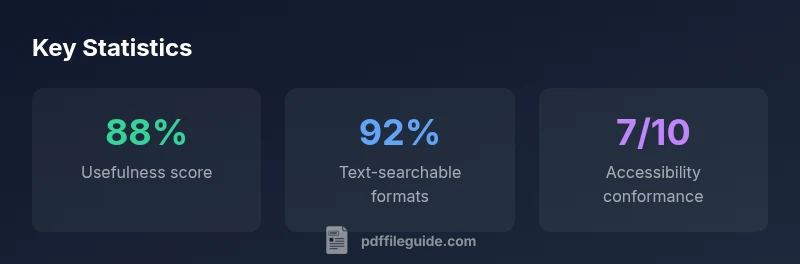
The best editions for scholarly work on poetry provide a balance of text accuracy and navigability. Look for text-searchable content with embedded fonts, descriptive metadata, and clear tagging that mirrors the poem’s structure. If you encounter garbled characters, missing diacritics, or inconsistent line breaks, it’s usually a sign of poor OCR or scan quality. Font embedding helps ensure the poem prints and displays the same way across devices, preventing font substitutions that alter rhythm. Accessibility conformance, such as PDF/UA or tagged PDFs, improves screen-reader navigation and reading order, which is crucial for longer passages and annotations. When possible, compare multiple editions to identify one that preserves stanza breaks, capitalization, and punctuation conventions that influence interpretation.
How to edit and annotate a poetry PDF without losing form
Editing poetry in PDF demands caution. Prefer non-destructive annotation tools (stickies, highlights, and inline comments) over direct text edits to avoid disrupting lineation. Always keep a backup copy of the original before making changes. If you must modify text, use a dedicated editing layer and preserve the author’s typography, including capitalization and punctuation. When adding notes, place them in margins or anchored comments so the primary poem remains untouched. For digital editions, capture exact line breaks and stanza spacing to preserve the poem’s rhythm when reflowing text for different screen sizes.
Converting Ode on a Grecian Urn PDF to other formats
Converting a poetry PDF to Word or another format introduces risks to stanza breaks, diacritics, and typography. Before conversion, verify the source’s licensing and ensure you have rights to reuse the text. Use robust conversion tools that support complex layouts and keep the original pagination where relevant. After conversion, perform a line-by-line check against the PDF source, confirm that diacritics are preserved, and re-embed fonts if necessary. When preserving scholarly notes or annotations, ensure they remain linked to the corresponding lines so readers can trace commentary with minimal cognitive load.
Accessibility and searchability for poetic PDFs
Accessibility is not optional; it enhances searchability and comprehension for all readers. Ensure the PDF includes a logical reading order, alternative text for figures, and a navigable outline. Tagging sections in a way that mirrors the poem’s structure helps screen readers announce line breaks and stanzas accurately. Font choices matter too: embedded, accessible fonts reduce the risk of misreading syllables or caesura. For researchers, adding metadata like author, title, and subject improves discoverability in libraries and catalogs. The end goal is a PDF that preserves the poem’s musicality while remaining usable on mobile devices and assistive technologies.
Edition comparison for Ode on a Grecian Urn PDFs
| Edition Type | Key Traits | Pros | Cons |
|---|---|---|---|
| Original print edition (scanned as PDF) | Line breaks preserved, but OCR may be needed | Preserves authentic typography; widely accessible if scanned well | OCR can introduce errors; text may not be searchable |
| Native PDF edition | Selectable text, embedded fonts | Text searchability; consistent rendering | May be less available for classic poems |
| OCR-edited PDF | Text searchable after OCR | Improves accessibility and search | OCR errors can misrepresent diacritics or punctuation |
Questions & Answers
What should I look for in a high-quality Ode on a Grecian Urn PDF?
Look for a text-searchable edition with embedded fonts, correct diacritics, and proper tagging that mirrors the poem’s stanza structure. Ensure metadata is complete and the reading order is logical for searchers and researchers.
Choose a text-searchable PDF with embedded fonts and proper tagging; verify stanza structure and diacritics.
How can I ensure accessibility in a poetry PDF?
Ensure the PDF adheres to accessibility standards (such as tagging, reading order, and alternative text). A well-structured outline helps screen readers announce line breaks and stanza divisions accurately.
Check tagging, reading order, and alt text to support screen readers.
Is OCR reliable for poetry text?
OCR can be reliable when using high-quality scans and post-OCR proofreading. Expect occasional diacritic or punctuation adjustments, especially with older fonts.
OCR is useful but inspect and correct diacritics and line breaks carefully.
What are the risks of converting a poetry PDF to Word?
Conversion can disturb lineation and stanza spacing, misplace hyphenation, and alter font metrics. Always compare the converted text with the original PDF and preserve layout where it matters.
Conversions can reshuffle lines; always verify against the source.
Where can I legally obtain Ode on a Grecian Urn PDF editions?
Look for publicly accessible editions from libraries or publishers with clear licensing. If rights are unclear, prefer museums or university-hosted digital archives that specify usage terms.
Use licensed or public-domain editions; check usage terms.
“"A well-structured PDF edition preserves the poem’s rhythm and lineation for readers and researchers alike."”
Key Takeaways
- Prioritize reputable editions to preserve lineation.
- Check for embedded fonts and proper tagging.
- Use non-destructive editing workflows to avoid breaking form.
- Verify licensing before conversion or reuse.