iPhone Scan PDF: The Complete Mobile Guide
Learn how to scan documents with your iPhone and save them as searchable PDFs. This step-by-step guide covers apps, OCR, metadata, and secure sharing for professional workflows.


You can turn any iPhone into a fast PDF scanner by using built-in tools like Notes or Files, then export as a PDF and optimize for sharing. This guide shows you how to capture clean images, convert to searchable PDFs with OCR, and securely store and share them from iPhone.
Why iPhone scanning matters for PDFs
In modern workflows, the iPhone serves as a portable scanning device that can produce high-quality PDFs quickly. For professionals who need to digitize physical documents, the ability to scan, convert, and annotate on the go reduces turnaround times and keeps projects moving. The keyword iphone scan pdf captures this capability: you can capture pages with the camera, export them as PDFs, and apply OCR to make text searchable. In this guide, you’ll learn best practices for image capture, conversion, and secure storage on iPhone.
Tools and settings for iPhone PDF scanning
Before you begin, gather a few essential tools. Your iPhone and the built-in apps offer powerful scanning capabilities, but you can also use third-party apps for multi-page merges or stronger OCR. Activate Camera permissions for the apps you’ll use, enable Live Text for on-device OCR where available, and decide whether you want to store PDFs in Files, iCloud, or another cloud service. When you’re ready, ensure your iPhone is connected to a reliable network or set to offline mode if you’re not syncing.
Capture best practices: lighting, alignment, and stability
Good results start with the capture. Use even, natural lighting to avoid shadows, and place the document on a flat, non-reflective surface. Fill the frame without cutting off edges, hold the device parallel to the page, and use a short exposure to prevent glare. For multi-page documents, shoot in sequence and keep a consistent distance to ensure uniform page size and clarity. If you’re working handheld, brace your elbows or use a small tripod.
Convert to PDF and OCR: native apps vs. third-party options
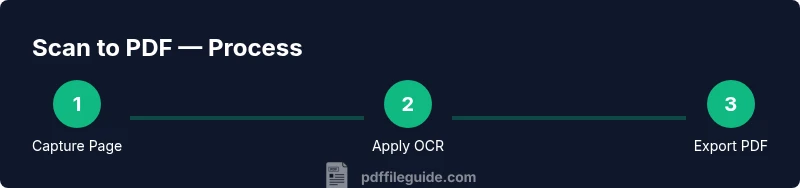
iPhone users can leverage native capabilities in Notes or Files to create PDFs directly from scans. Notes can create multi-page PDFs from a series of captures, while Files offers export with compression options. Live Text can provide on-device OCR to make text searchable, though accuracy varies by language and font. Third-party apps often offer advanced OCR, easier multi-page compilation, and batch processing—use them if your workflow benefits from these features.
Metadata, compression, and accessibility considerations
After you create the PDF, rename the file clearly and add metadata such as author and keywords if the app supports it. Use compression settings that balance file size and readability, especially for email or cloud-upload constraints. If accessibility matters, enable tagged PDF output and ensure text remains selectable to support screen readers. OCR-processed PDFs should be tested in a PDF reader for searchability.
Organizing and sharing: workflows for professionals
Store scanned PDFs in organized folders within Files or a cloud service with a consistent naming convention. Use sharing permissions to control who can view or edit, and consider adding a password or using device-level encryption where appropriate. For collaboration, create shared folders and set clear version control rules. Integrate with workflows like email templates or project management tools to streamline handoffs.
Troubleshooting common issues
Common problems include blurred text, glare on glossy paper, or OCR failing on rare fonts. Re-capture with better lighting, adjust the distance, or retake the page at a higher resolution. If OCR fails, try a different app or enable on-device OCR for a best-effort pass. Ensure your document is flat and the camera lens is clean to avoid artifacts.
Security and privacy when scanning with iPhone
Be mindful of where you store sensitive PDFs. Disable unnecessary cloud syncing for confidential documents, or encrypt files after creation. Review app permissions to minimize access to your camera and files, and use strong device unlock methods. When sharing, use password protection or encrypted links where supported by your storage provider.
Advanced tips: automation and shortcuts
Leverage Shortcuts to automate routine scans—create a shortcut that captures, converts to PDF, and saves to a designated folder with a standard name. You can also set up automatic compression presets and batch renaming. For power users, combine scanning with cloud-to-cloud transfer rules to maintain consistent archives.
Tools & Materials
- iPhone with latest iOS(Ensure camera works; supports Live Text)
- Notes app(Create multi-page PDFs from captures)
- Files app or cloud storage(Export PDFs and manage storage)
- Live Text (on-device OCR)(Available on supported devices)
- Third-party scanning app (optional)(For enhanced OCR and multi-page merges)
- Stable surface or tripod (optional)(Keeps camera steady)
- Good lighting (LED lamp)(Reduces shadows and glare)
- Backup solution(Local or cloud backup for PDFs)
Steps
Estimated time: 20-60 minutes
- 1
Prepare your device
Check camera and permissions, unlock the device, and choose the app you’ll use for scanning. Ensure you have enough space to save the PDF and that you’re connected to the right storage location.
Tip: Enable camera access for the scanning app before you start. - 2
Capture the page
Position the document on a flat surface, align the camera parallel to the page, and capture without cutting edges. For multi-page documents, keep a consistent distance and angle for uniform pages.
Tip: Use the grid or level cues if your app offers them. - 3
Review image quality
Review each capture for blur, glare, or shading. Re-take pages if needed and crop to exact page edges to ensure clean PDFs.
Tip: Take extra seconds to re-shoot if text is not legible. - 4
Export as PDF
Choose the export option and select PDF. In Notes, you can compile multiple scans into a single PDF; in Files, you can structure pages as needed before saving.
Tip: Choose a compression setting that preserves readability. - 5
Apply OCR if needed
If your content needs full-text search, enable on-device OCR or use a third-party OCR option. Review the text for accuracy and correct obvious errors.
Tip: Dark fonts and light backgrounds OCR more accurately. - 6
Name and save
Give the PDF a descriptive name and save it to a project folder. Add metadata if your app supports it (author, keywords).
Tip: Use consistent naming conventions. - 7
Share securely
If sensitive, set permissions or encrypt the file before sharing. Use secure links or password-protected options where available.
Tip: Prefer direct device-to-cloud transfers over long email attachments. - 8
Archive and review
Move the PDF to your long-term archive and run a quick accessibility check if needed (tags, alt text), so the file is usable later.
Tip: Create a simple checklist to repeat for future scans.
Questions & Answers
Can I OCR documents with my iPhone for full-text search?
Yes. iPhone on-device OCR via Live Text or third-party apps can make PDFs searchable. Results vary by font and language, so verify accuracy after scanning.
You can make your PDFs searchable using OCR on your iPhone. Check accuracy after scanning.
Do I need an internet connection to scan and save PDFs on iPhone?
No, you can scan and save PDFs offline using built-in apps. If you enable cloud storage, you may upload later when online.
No internet is required for local scanning and saving, unless you choose to sync.
How can I secure scanned PDFs on iPhone?
Use app-level passwords, device unlocking, or encrypted sharing when supported. For highly sensitive files, prefer local storage with restricted access.
Lock the PDF with a password if your app supports it and share via secure links.
Can I merge multiple page scans into a single PDF on iPhone?
Yes. Many scanning apps and Notes can combine multiple captures into one PDF before saving or sharing.
You can merge pages into one PDF before saving.
Are there privacy concerns when scanning business documents on iPhone?
Be mindful of camera access and cloud storage permissions. Use device encryption and disable unnecessary sync for sensitive files.
Be mindful of where the file goes; use encryption and limit syncing for sensitive material.
What is the best way to back up scanned PDFs?
Store copies in a secure backup location (cloud or local) and maintain a simple folder structure for retrieval.
Back up scans to a secure location with clear folders.
Watch Video
Key Takeaways
- Capture clean images with proper lighting
- Export and save as organized PDFs
- Enable OCR for searchable text
- Name, tag, and store PDFs consistently
- Share with appropriate security measures
- Automate repetitive steps with Shortcuts