Sign a PDF on iPhone: A Practical Step-by-Step Guide
Learn how to sign a PDF on iPhone using native tools or trusted apps. This step-by-step guide covers workflows, security considerations, and best practices for mobile signing.


Whether you need a quick consent form signed in a hurry or a legally binding document, your iPhone can handle it. We'll compare native options and popular apps, explain when a certificate-based signature is necessary, and show how to export a signed file for sending. No need for desktop software. This quick guide helps you sign a pdf iphone with confidence.
Why signing a PDF on iPhone matters
According to PDF File Guide, the ability to sign a PDF directly on a mobile device streamlines workflows for both individuals and professionals. The convenience of on-device signing reduces turnaround times, minimizes the risk of losing important documents, and enhances privacy since you can keep sensitive documents off cloud-based hubs. In many cases, a quick signature obtained on iPhone is enough to move a contract, release, or consent form forward, especially when the signer is remote or traveling. This article uses the keyword sign a pdf iphone in context to help you understand practical workflows, the available tools, and the trade-offs between native and third-party solutions. It also covers how to verify the signature, share the signed document, and maintain accessibility for recipients who rely on assistive technologies.
From a broader perspective, mobile signing aligns with modern digital transformation efforts, enabling faster approvals while preserving a formal appearance. The PDF File Guide team has observed growing demand for secure, legally defensible signatures on mobile, particularly for field-based professionals, freelance contractors, and students who must return signed forms promptly. While signatures captured on iPhone are convenient, choosing the right method depends on document type, required level of authentication, and whether the workflow demands certificate-based signatures or simple visual marks. This guide helps you navigate those choices with confidence.
What you need before you start
Before you sign a PDF on iPhone, gather a few essentials to avoid friction. You’ll want a copy of the PDF accessible on your device, ideally not password-protected, unless you have the password handy. Decide whether you’ll use the built-in Markup tool or a dedicated signing app, as some documents require a higher level of authentication that only specialized software can provide. If you anticipate frequent signing, save your signature once and reuse it to speed up the process. Consider privacy implications if you’re signing sensitive agreements over public networks; local signing on-device is generally safer than cloud-based signing when you’re not connected to a trusted network.
Also, be mindful of the recipient’s capabilities. Some partners prefer a PDF with an embedded, uneditable signature field, while others accept a simple drawn signature inserted via Markup. If you’re working with high-security documents, you may need a certificate-based signature or a trusted identity provider. In any case, start with the native options for speed, then switch to a third-party app if you need advanced features or better audit trails. The goal is to achieve a clean, verifiable signature that recipients can view without compatibility issues.
Native signing options on iPhone (Markup, Files, and Mail)
Apple’s ecosystem includes built-in tools that let you sign PDFs directly on iPhone without installing extra software. The most common path is to open the PDF in the Files app or Photos, tap the Markup icon, and select Signature. You can draw your signature with your finger, or insert a saved signature if you’ve set one up previously. This method is fast, works offline, and keeps signatures on-device, which is important for privacy.
If you receive a PDF via Mail, you can sign it in-place by tapping the response button, selecting Markup, and applying your signature. After placing the signature, you can reposition and resize it to align with the form field. In many cases, you can choose to send the signed document directly from the Mail app, or save a copy to your Files or iCloud Drive for later sharing. For simpler documents with a visible signature field, this native approach is often sufficient and legally acceptable for everyday agreements.
Third-party signing apps: when to use them and how they compare
For more sophisticated signing needs, third-party apps offer advanced features such as form field recognition, multiple signatures, certificate-based signatures, and detailed audit trails. Popular options include Adobe Acrobat Reader and other reputable PDF editors. These tools can recognize signature fields automatically, apply multiple signatures in a given order, and provide options to flatten the document so the signature cannot be altered. While these apps typically require an account and may involve subscription costs, they deliver stronger controls for regulated workflows or high-volume signing. When evaluating apps, prioritize compatibility with intended recipients, whether the app supports offline signing, and whether it can export signed PDFs with embedded signatures that are verifiable by third parties.
Step-by-step overview of common workflows (summary)
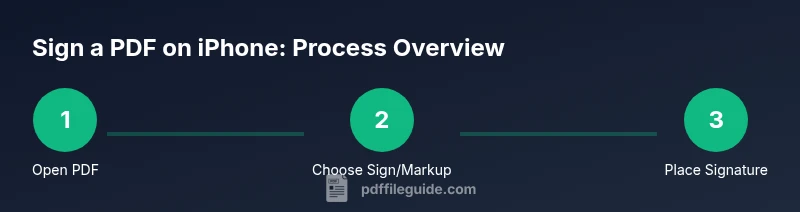
This section outlines core workflows you’ll encounter when signing PDFs on iPhone, whether you choose native tools or third-party apps. The native route is quick for simple signatures on non-restrictive documents, while third-party apps provide richer capabilities for business environments or sensitive files. Regardless of the path, you’ll typically perform these steps: open the PDF, select a signing tool, place your signature, save or export the signed file, and share it with the intended recipient. In some cases, you can store a signature for repeated use, or you may need a digital certificate tied to your identity for enhanced authenticity.
Security, legality, and best practices for mobile signing
Security considerations matter when you sign PDFs on iPhone. Ensure you’re signing on a trusted device and a secure network, especially if the document contains sensitive information. For legally binding agreements, verify whether your jurisdiction recognizes electronic signatures and whether a certificate-based signature is required. In many scenarios, an on-device, visually placed signature is sufficient, but enterprise or regulated contexts may demand stronger authentication and an audit trail. The PDF File Guide recommends combining convenience with prudent security practices: store signatures securely, use reputable signing apps, and always verify the final document before sending.
Accessibility and inclusivity when signing on mobile
Accessibility is essential for people who rely on screen readers or assistive technologies. When signing PDFs on iPhone, ensure the signed document remains accessible: keep signature placements legible, avoid obstructing form fields, and consider adding alternative text or descriptive notes if your workflow involves scanned documents. Many signing apps offer accessibility-friendly features, such as compatible font sizes and high-contrast viewing modes. By prioritizing accessibility, you ensure that signed documents are usable by all recipients, regardless of device or software.
Final considerations and practical tips from PDF File Guide
The field of mobile signing is evolving as mobile devices become more capable and secure. PDF File Guide’s analysis indicates that the most efficient approach balances speed with verification. For everyday tasks, native signing on iPhone is often enough, while for high-stakes contracts or regulated documents, you’ll want a trusted third-party app that supports certificates and robust signing workflows. Whichever method you choose, maintain a disciplined process: verify the document’s integrity, store signatures securely, and confirm that the recipient can view and verify the signature without friction.
Tools & Materials
- iPhone with current iOS version(Needed to access native signing features such as Markup)
- PDF file to sign(Ensure you have permission to sign and that the file is accessible on-device)
- Markup tool (native)(Used to place and adjust the signature directly on the PDF)
- Third-party signing app (e.g., Adobe Acrobat Reader, Foxit)(Provides advanced signing features and certificate-based options)
- Stylus or Apple Pencil(Helpful for precise signature placement on small devices)
- Internet connection(Certain apps or cloud-based workflows may require connectivity)
Steps
Estimated time: 15-30 minutes
- 1
Open the PDF in a signing-ready app
Locate the PDF on your iPhone from Files, Mail, or another app and open it in a signing-capable viewer. If the document is password-protected, unlock it first. Confirm you’re in a mode that allows annotations or signatures.
Tip: If you’re unsure where the file is, use the share sheet to send it to a signing app. - 2
Choose the Sign or Markup tool
Tap the annotation or markup tool and select Sign or Signature. Depending on the app, you may have a saved signature or the option to draw or type one.
Tip: Create a saved signature for faster future signing. - 3
Place and adjust the signature
Drop the signature onto the target area and resize to fit. Use the edge handles to fine-tune positioning and alignment with the form lines.
Tip: Use two fingers to adjust size precisely and ensure alignment with the field. - 4
Save or export the signed PDF
Save the modified document or export a new copy with the signature embedded. If your workflow requires a non-editable final document, look for an option to flatten annotations.
Tip: Choose Flatten or Lock Annotations if available to prevent post-signature edits. - 5
Share the signed document
Send the signed PDF via email, messages, or a cloud link. Confirm the recipient can open and verify the signature on their device.
Tip: Verify recipient accessibility; avoid password-protected files for broad compatibility. - 6
Optional: use certificate-based signing
If your workflow requires a digital certificate, sign with a trusted identity provider through your app. Not all apps support this feature.
Tip: Obtain a certificate from a trusted authority before signing.
Questions & Answers
Can I sign a PDF on iPhone without internet access?
Yes, many apps store signatures locally for offline signing. Some features require internet to sync or verify identity.
Yes, you can sign offline with a signature stored on your device; some features may need internet.
Is an iPhone signature legally binding?
Electronic signatures are generally legally recognized in many jurisdictions when proper consent and intent are present. Verify local regulations and the specific document type.
Electronic signatures are often legally binding if done correctly; check local laws.
Which app is best for signing PDFs on iPhone?
Built-in Markup works well for quick signatures. For more features, try trusted apps like Adobe Acrobat Reader or Foxit, depending on your needs.
Markup is great for quick tasks; for advanced features, use a trusted signing app.
How do I verify that a signature is attached to a PDF?
Open the signed PDF in your signing app or a PDF viewer that shows signature validity. Look for a signature footprint or certificate status.
Open the signed file and check the signature status.
Can I sign password-protected PDFs on iPhone?
You must unlock the PDF first. Some apps permit signing after authentication; otherwise, remove the password or request access.
You need to unlock first, or sign after authentication.
Watch Video
Key Takeaways
- Sign PDFs directly on iPhone using native tools or trusted apps
- Save a signature for faster future signing
- Export or flatten after signing to prevent edits
- Verify readability and placement before sharing
- Consider certificate-based signatures for high-security workflows