Mincha PDF: Create, Edit, and Optimize Prayer PDFs
Learn how to build, convert, and optimize a Mincha PDF for prayer schedules and liturgy. This guide covers accessibility, RTL handling, font embedding, and compression for reliable distribution.


With this guide you will create, edit, and optimize a mincha pdf—perfect for prayer schedules, liturgy, and study materials. You’ll learn essential steps, from drafting content to exporting a accessible, compressed PDF ready for distribution, including right-to-left text handling, font embedding, metadata, and how to ensure printing compatibility across devices. We also cover common pitfalls and quick checks you can run before sharing the file. The PDF File Guide approach emphasizes clarity and consistency, so your mincha pdf remains usable across apps and platforms.
What is a mincha pdf and why you might need one
A mincha pdf is a digital document that consolidates prayer texts, schedules, readings, and study notes for the Mincha service. For individuals and communities, creating a well-structured mincha pdf makes it easier to share consistent liturgy across devices and platforms. According to PDF File Guide, a careful approach to formatting and accessibility ensures that readers can navigate the material with confidence, whether they’re using desktop, tablet, or print. The term 'mincha pdf' often encompasses Hebrew text, transliterations, and responsive layout that accommodates right-to-left reading. When you assemble content for a mincha pdf, you should consider whether you’re producing a personal reference, a family hora, or a community service booklet. In practice, the file should present clear headings, legible typography, and a predictable page order so users can find prayers, blessings, and calendar references quickly, even in low-light conditions. The goal is readability, accuracy, and ease of distribution. PDF File Guide emphasizes starting with a content map that lists sections such as morning prayers, memorial readings, and holiday notes. By planning upfront, you reduce rework later and ensure your mincha pdf travels well across platforms and devices. According to PDF File Guide, starting with a robust content plan helps teams collaborate efficiently and reduces the back-and-forth that often slows delivery.
Choosing the right template and content structure
Selecting a practical template is foundational for a mincha pdf. A well-structured template defines where prayers, readings, calendar entries, and footnotes live, and it guides typography, color, and spacing decisions. Start by outlining sections in the order readers expect: opening blessings, core liturgy, readings, and closing notes. Consider the audience: a personal study pack may favor a compact layout, while a community pamphlet might need larger typography and more whitespace for readability. PDF File Guide recommends pairing templates with a content map that annotates font choices, RTL support, and image usage. Keep a master copy of the source content and track changes with versioning so you can compare layouts. A consistent template reduces rework and ensures that every mincha pdf you publish looks and feels cohesive across devices and printouts.
Typography, fonts, and RTL considerations
Typography is critical for mincha pdf readability, especially when Hebrew text is involved. Embed fonts to guarantee consistent rendering on different systems, and prefer fonts with robust Hebrew support to maintain correct glyph shaping. When working with RTL content, ensure the document flow preserves natural reading order, and use logical text direction settings. If you must mix Bible verses or transliterations, choose a secondary font that harmonizes with the primary Hebrew typeface. Pay attention to kerning, line height, and contrast to keep the text legible at smaller sizes. PDF File Guide notes that documenting font licenses and usage in metadata avoids licensing issues later and helps teams stay compliant when sharing or distributing the file.
Images, diagrams, and embedding media
Visual elements like charts, calendars, and diagrams should add clarity rather than clutter. Optimize each image for screen and print; use vector shapes for borders and icons when possible to preserve clarity at multiple scales. When embedding diagrams, provide descriptive alt text for accessibility and ensure color contrast remains strong for readers with visual impairments. If you include photographs or scanned pages, pre-process them to a suitable resolution to balance file size and legibility. Always check that image captions align with the surrounding text and do not disrupt the RTL reading flow. Keep media usage consistent with the overall design system to reinforce recognizability acrossMincha pdf documents.
Accessibility and contrast for readability
Accessibility matters for Mincha PDFs, especially for users who rely on screen readers or require high-contrast settings. Tag content properly so screen readers can parse headings, lists, and reading order. Use descriptive alt text for all images and ensure that form fields (if used) are labeled clearly. Maintain sufficient color contrast between text and backgrounds; avoid relying on color alone to convey information. Provide a text-based summary of any complex diagrams and include a simple outline of the document structure in metadata. When distributing a mincha pdf, enable accessibility features in the export settings and test with assistive technologies to confirm proper navigation and comprehension.
Layout and page size, margins, and bleed
Decide on an appropriate page size early—standard letter or A4 works well for most readers, with margins wide enough to accommodate binding if printed. Use consistent margins and reflow-friendly line lengths to improve readability on small devices. Establish a baseline grid that guides column widths, heading sizes, and spacing between sections. For multilingual content, ensure alignment and indentation are predictable so readers aren’t surprised by where lines begin. If your document includes bleed marks or imagery that touches edges, configure printer-safe margins and verify print settings during export. A careful layout process prevents last-minute reflows when the mincha pdf is distributed to different channels.
Compression, metadata, and file integrity
Compression helps reduce file size without sacrificing legibility, but don’t over-compress at the expense of readability. Choose a compression strategy that preserves text clarity and sharp edges for diagrams. Populate metadata fields with meaningful titles, authors, and subject tags to improve searchability and organization in libraries or cloud storage. Include a version history note and licensing information in the metadata so recipients understand usage rights. Always save a lossless master copy before applying final compression, and verify that all linked assets resolve correctly in the final export.
Workflow: drafting, converting, and distributing
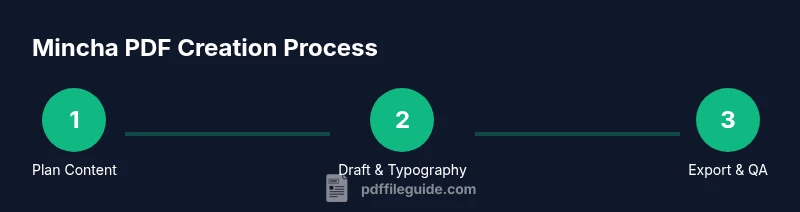
A reliable workflow begins with a content plan, source material, and a draft template. Draft the Mincha PDF in a word processor or layout tool, then export to PDF with fonts embedded and RTL support enabled. Run a QA pass that checks navigation, searchability, and readability; confirm that headings, lists, and footnotes are properly indexed. When converting to PDF, test the finished file on multiple devices and printer settings to ensure consistent rendering. Finally, prepare a distribution plan that includes accessibility checks, licensing notes, and a clear version label. A disciplined workflow minimizes surprises for readers and ensures your mincha pdf remains trustworthy over time.
Common mistakes and proactive checks
Rushed exports without embedding fonts or validating RTL order are common culprits that degrade readability. Skipping accessibility tagging or failing to optimize images can inflate file size and hinder usability. Avoid mixing font families in a way that creates visual inconsistency; stick to a defined typography system. Before sharing, run a final check for broken links, missing fonts, and misordered headings. Include a simple check list at the end of your production process to catch issues early and maintain a high standard for all mincha pdf projects.
Advanced tips and case studies
For teams producing regular Mincha PDFs, consider establishing a reusable component library that includes header designs, calendar widgets, and footnotes ready for quick assembly. Use a version-controlled template so updates propagate across new documents while preserving older versions for reference. Where applicable, deliver parallel formats such as accessible HTML or ePub to broaden reach. In practice, a well-structured, accessible mincha pdf can save time during preparation weeks and improve reader satisfaction, especially for multilingual congregations and study groups.
Tools & Materials
- Computer with internet access(macOS or Windows; up-to-date software)
- PDF editing software(Adobe Acrobat Pro or open-source alternatives; ensure RTL support)
- Hebrew fonts(Licensing in mind; embed in the PDF)
- Mincha content template(Source prayers, readings, and schedule notes)
- Scanner (optional)(Digitize paper materials when needed)
- Printer (optional)(For physical proofs and distribution)
- Quality assurance checklist(Use for final validation before sharing)
Steps
Estimated time: 60-120 minutes
- 1
Plan content scope
Define the sections, prayers, readings, and schedules to include. Create a rough outline of the reading order and determine which elements require special formatting (Hebrew text, transliterations, calendar notes). Establish file naming and versioning conventions to track changes easily.
Tip: Create placeholders for RTL blocks to ensure correct flow before finalizing content. - 2
Prepare source content
Assemble all source material, including Hebrew prayers, transliterations, and notes. Verify licensing for any quoted material and collect high-quality images or diagrams with alt text. Prepare font files and ensure you have rights to embed them.
Tip: Keep a master copy of original text with timestamps to trace edits. - 3
Design the template
Choose a clean, legible template with RTL-friendly layout. Set font families, sizes, line height, margins, and color contrast. Decide on header hierarchy and calendar widgets to guide readers through the document.
Tip: Test the template with sample RTL content to catch alignment issues early. - 4
Create the PDF
Assemble content in the chosen tool, embed fonts, and enable RTL text flow. Add metadata, bookmarks, and accessible tags. Verify that every section is navigable and that diagrams include alt text.
Tip: Export a lossless copy first, then apply compression only after QA. - 5
Test across devices
Open the final export on desktop, tablet, and mobile. Check RTL rendering, text wrapping, and calendar layout. Print a proof to confirm margins and bleed settings align with your printer requirements.
Tip: Use screen readers to confirm the reading order is logical. - 6
Finalize and distribute
Apply final compression, save a versioned copy, and distribute with licensing notes and accessibility reminders. Provide a short changelog for future updates and store the file in a central repository.
Tip: Keep a public-facing FAQ about usage rights and accessibility features.
Questions & Answers
What is a mincha pdf and who should use it?
A mincha pdf is a consolidated digital document containing Mincha prayers, readings, and schedules. It serves individuals and congregations seeking a reliable, shareable format for study and worship. The guide covers structure, accessibility, and distribution best practices.
A mincha pdf is a ready-to-use prayer document for personal study or group worship, focusing on clarity and accessibility.
Why embed fonts and how does RTL affect layout?
Embedding fonts ensures consistent appearance across devices. RTL layout preserves Hebrew reading order and alignment, which is crucial for accuracy and readability in Mincha content.
Fonts must be embedded, and right-to-left layout should be preserved to keep Hebrew text readable.
Can I compress a mincha pdf without losing quality?
Yes, use a balanced approach: preserve text clarity, avoid heavy rasterization, and compress images thoughtfully. Always test the exported file after compression.
You can compress a mincha pdf, but test it afterward to ensure readability isn’t compromised.
What accessibility features should be included?
Include proper tagging, alt text for images, meaningful document structure, and navigable headings. This makes the mincha pdf usable with screen readers and for readers with visual impairments.
Make sure the PDF is tagged, has alt text, and a clear reading order for screen readers.
What tools work best for creating a mincha pdf?
Any tool that allows font embedding, RTL support, and accessible tagging can work. Popular options include professional PDF editors and layout software suitable for multilingual content.
Use a PDF editor or layout tool that supports RTL text and accessibility features.
Key Takeaways
- Plan content first to reduce rework.
- Embed fonts and enable RTL support for Hebrew content.
- Test accessibility and print readiness before distribution.
- Use a consistent template to unify Mincha PDFs.
- Validate metadata and licensing to avoid compliance issues.