Sajda PDF Editing: A Practical How-To Guide
Learn Sajda PDF editing through a structured, editor-friendly workflow. This guide covers tool selection, preparation, core tasks, accessibility, security, and workflow integration for professional results.


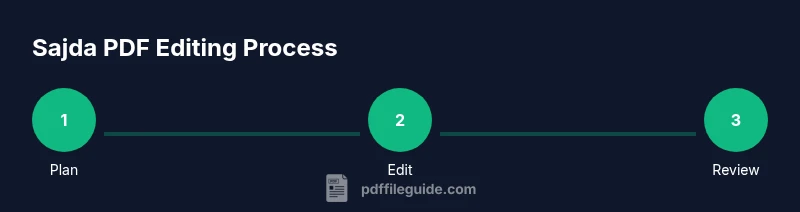
You will learn a repeatable Sajda PDF editing workflow: plan edits, choose appropriate tools, perform non-destructive changes, verify accessibility and compatibility, and deliver a polished file. Expect recommended practices, step-by-step actions, and quality checks that apply to professional documents.
What sajda pdf editing entails
Sajda pdf editing blends text modifications, image updates, form adjustments, and metadata optimization for PDFs tied to Sajda materials. It requires understanding PDF structure, typography, and accessibility. Practically, you’ll handle source files from drafts, scans, or exported reports that follow Sajda typography and layout conventions. The process involves planning revisions, selecting tools, and validating results across devices. By mastering sajda pdf editing, you preserve document integrity while improving readability and distribution. According to PDF File Guide, maintaining a clear revision history is essential to accountability and quality.
Why sajda pdf editing matters for professionals
In education, religious institutions, research, and non-profits, sajda pdf editing ensures PDFs meet accessibility standards, remain searchable, and render consistently across readers. High-quality edits reduce errors when updating translations, notes, or annotations. PDF File Guide analysis shows teams that document their steps, test across devices, and keep backups report faster delivery and reduced rework. The practice supports governance and long-term preservation by preserving metadata and version history, which is critical for auditors and collaborators.
Choosing the right sajda pdf editing tool
Desktop editors and cloud-based services each bring advantages for sajda pdf editing. Desktop apps often offer deeper font embedding, batch processing, and offline reliability, while cloud tools enable collaboration and automatic updates. When evaluating tools, verify support for Sajda-friendly fonts, accessibility tagging, OCR options, and secure sharing. For organizations, consider licensing, platform compatibility, and revision-tracking features to maintain a defensible workflow.
Preparing your source files for editing
Begin with a clean source: organize original PDFs, source text, and any images or forms you will modify. Create a dedicated project folder, versioned backups, and a numeric naming convention. Extract any embedded fonts and confirm licensing. If you’re working from scans, apply OCR with careful quality checks to avoid misrecognized characters. Preparing files properly reduces surprises during editing and preserves layout fidelity.
Core editing tasks and how to perform them
Typical tasks include: (1) editing text while preserving typography; (2) replacing or updating images; (3) adjusting form fields and annotations; (4) embedding fonts and preserving color profiles; (5) updating metadata and bookmarks; and (6) linking external resources. Use non-destructive editing when possible, work on a duplicate copy, and document changes for traceability. Examples and settings vary by tool, but the goals are consistent: accurate content, accessible structure, and clean presentation.
Quality control and optimization for distribution
Quality checks should cover content accuracy, typography fidelity, image resolution, color accuracy, and metadata integrity. Validate that fonts are embedded, text remains searchable, and links work on multiple devices. Optimize for distribution by reducing file size without sacrificing readability and ensuring compatibility with common readers and browsers. Maintain version history and keep backups in a secure location.
Accessibility considerations in sajda pdf editing
To serve diverse users, ensure logical reading order, proper tagging, alt text for images, and accessible tables. Verify that screen readers can navigate with headings, lists, and semantic structure. Use the PDF/UA guidelines as a baseline and test with assistive tech. Accessibility improvements often require re-checking after edits to confirm maintained compliance.
Security, permissions, and version control during editing
Control who can edit the document and track changes with revision history. Apply password protection when sharing drafts, and remove permissions before final distribution. Maintain a secure archive of versions and use a change log for audit purposes. Security is essential when editing sensitive Sajda-related materials and religious texts.
Integrating sajda pdf editing into your workflow
Incorporate sajda pdf editing into a broader document lifecycle: intake, editing, review, and delivery. Standardize file naming, implement a review checklist, and establish deadlines. Use collaboration features to assign tasks, and maintain a centralized repository to support consistent outputs for teams.
Tools & Materials
- Computer or workstation with reliable editing software(Minimum 8 GB RAM; SSD preferred for speed)
- Sajda PDF editing software(Supports non-destructive editing, tagging, and font embedding)
- Backup storage (external drive or secure cloud)(Keep at least two recent backups; rotate backups)
- Image editor (e.g., GIMP, Photoshop)(Optional for image replacement or optimization)
- Licensed fonts and embedding rights(Ensure fonts can be embedded and distributed with edits)
- OCR tool (if working with scans)(2-3 passes recommended to improve accuracy)
Steps
Estimated time: 3-5 hours
- 1
Prepare and plan
Gather all source materials, define editing goals, and set success criteria. Create backups and a project folder structure before making changes.
Tip: Define success criteria up front to reduce back-and-forth revisions. - 2
Choose tools and set up
Select editing software that supports Sajda fonts, tagging, and secure sharing. Configure preferences for non-destructive editing and preserve original copies.
Tip: Enable non-destructive editing and create a duplicate before edits begin. - 3
Perform non-destructive edits
Make changes on a duplicate copy, adjust text, replace images, and update metadata while preserving the original layout.
Tip: Use layers or separate PDFs to avoid overwriting the source. - 4
Check accessibility and searchability
Run accessibility checks, verify reading order, alt text, and tag structure so screen readers can interpret the document.
Tip: Run a screen-reader simulation to detect issues early. - 5
Quality control and optimization
Review typography, font embedding, color profiles, and file size. Validate links and forms, and ensure device compatibility.
Tip: Test across at least two devices and two readers. - 6
Export, verify, and archive
Export the final version with proper security settings, store backups, and document changes for auditability.
Tip: Keep an external backup in a different location.
Questions & Answers
What is sajda pdf editing and when should I use it?
Sajda pdf editing refers to the structured process of modifying PDFs branded for Sajda materials, including text edits, image updates, form adjustments, and metadata improvements. Use it when you need to update content, fix errors, or improve accessibility while preserving the document’s original layout.
Sajda PDF editing is the structured process of updating Sajda PDFs, including text, images, and metadata, while maintaining layout fidelity.
Which tools work best for sajda pdf editing?
Any tool that supports non-destructive editing, font embedding, and accessible tagging can work well for sajda pdf editing. Consider desktop apps for offline work and cloud options for collaboration, and verify licensing and export options.
Choose tools that support non-destructive editing, font embedding, and accessibility tagging.
Can I edit scanned PDFs without OCR?
Editing scanned PDFs effectively typically requires OCR to convert images into selectable text. Validate OCR accuracy after processing, and correct misrecognitions before finalizing.
Yes, you generally need OCR to convert scans into editable text before editing.
How do I ensure accessibility in Sajda PDFs?
Ensure proper tagging, logical reading order, alt text for images, and accessible tables. Verify that screen readers can navigate with headings, lists, and semantic structure. Use the PDF/UA guidelines as a baseline and test with assistive tech.
Use proper tagging and alt text and test with screen readers.
What are the security considerations during editing?
Limit edit permissions, use secure sharing links, and apply password protection where appropriate. Maintain an audit trail and store backups securely.
Limit permissions and use secure sharing; keep a record of changes.
How do I track changes and revisions?
Maintain a change log documenting edits, dates, and responsible editors. Use versioned filenames and, if possible, built-in revision history features.
Keep a change log and versioned filenames to track edits.
Watch Video
Key Takeaways
- Plan edits with clear goals.
- Preserve layout fidelity while enabling accessibility.
- Validate across devices and readers.
- Maintain version history and backups.
- Deliver a secure, well-documented final PDF.