Can You PDF an Excel Spreadsheet? A Step-by-Step Guide
Learn how to convert Excel workbooks to PDF with practical steps, best practices, and tips to preserve formatting, charts, and readability for professional PDF workflows.


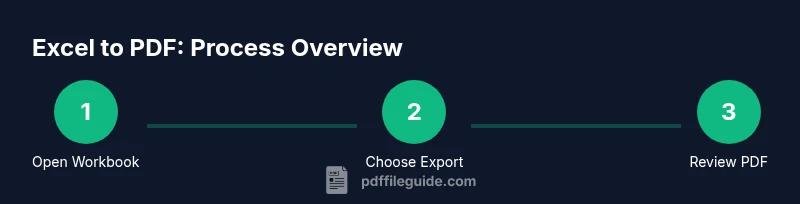
If you’re wondering can you pdf an excel spreadsheet, the answer is yes. You can convert XLSX files using Excel’s built‑in Save as PDF, Windows or Mac printers, or trusted online tools. This quick answer outlines the fastest methods and what to check before exporting. Whether you need a shareable summary or a formal report, there are reliable options to maintain layout, charts, and data fidelity.
What it means to PDF an Excel spreadsheet
A PDF (Portable Document Format) preserves layout and appearance across devices, making it ideal for sharing static data. Converting an Excel spreadsheet to PDF is a common task when you need to distribute a report that should not be edited. When you ask can you pdf an excel spreadsheet, the answer is usually yes, using built‑in Excel features, printer drivers, or online tools. The most reliable results come from careful page setup, consistent fonts, and accurate data. According to PDF File Guide, success starts with planning: decide which sheets to export, adjust margins, select an appropriate paper size, and decide whether to include gridlines, headers, or comments. The goal is to reproduce the exact look you present on screen while ensuring the file remains portable and easy to view in a standard PDF reader. Throughout this guide you’ll find practical steps, examples, and caveats to help you export with confidence, whether you’re preparing quarterly dashboards or project summaries, and regardless of your operating system.
Basic methods: Save as PDF vs Print to PDF
Excel provides several paths to create a PDF from a workbook. The most straightforward method is Save as PDF from the File menu, which preserves current formatting and lets you choose the sheets to export. A second approach is Print to PDF or using a virtual PDF printer, which can offer additional controls like page range and compression. Online tools and PDF creators can also convert XLSX to PDF, but you should weigh privacy and file size. Understanding these methods helps you pick the right one for your needs: quick share, archival quality, or a presentation-ready document. In many cases, the built‑in Save as PDF is sufficient, but if you need more customization (e.g., batch exports or PDF/A archiving), you may prefer a dedicated tool or a PDF printer.
Preparation: Clean data, formatting, and page setup
Before exporting, take a few minutes to clean data and align formatting for the PDF. Remove hidden rows, check for merged cells that could distort layout, and ensure fonts are embedded or widely supported. Set the print area to include only the necessary data, and adjust page orientation, margins, and scaling for readability. Decide whether to include gridlines, headers, and footers, and verify that charts render clearly when scaled. A quick preflight pass dramatically reduces surprises in the final PDF, saving time for you and stakeholders. As you prepare, think about your audience: a compact report for executives may require tighter scaling; a detail-rich dashboard may need larger page sizes and higher resolution images.
Windows workflow: Save as PDF from Excel
- Open the workbook and confirm the sheets you want to export. 2) Go to File > Save As, choose a location, and select PDF from the Save as type drop‑down. 3) In the options, choose All or the specific sheets, select Standard (publishing online and printing) for quality, and decide whether to export only the active sheet. 4) Click Save and review the resulting file. 5) If the layout seems off, return to Page Layout and adjust margins, orientation, and scaling. Pro tip: use Page Break Preview to verify how data will break across pages. This keeps charts and tables legible in the final PDF.
macOS workflow: Export as PDF from Excel
- With the workbook open, click File > Print, then use the PDF dropdown at the bottom of the dialog to choose Save as PDF. 2) Select the pages or sheets to export, and set the layout options (orientation, paper size, margins) to optimize readability. 3) If your document contains multiple worksheets, consider exporting them as a single multi-page PDF or as separate files depending on your needs. 4) Save the file, then open it in a PDF viewer to confirm that fonts and images render correctly. 5) For consistent results, embed fonts when available and use a high resolution for embedded charts.
Handling large workbooks and dashboards
Large Excel files with complex dashboards can create lengthy PDFs. To keep file sizes manageable and ensure quick viewing, limit the number of embedded images, optimize charts, and choose appropriate compression settings during export. Break very long reports into multiple PDFs if needed, or export only the critical sheets. If your workbook contains external data connections or live links, ensure the data state at export time matches the report you intend to share. In these cases, exporting in batches helps preserve performance and reduces the risk of corrupted exports. PDF File Guide notes that incremental exporting can improve consistency when delivering frequent updates to clients or team members.
Charts, images, and formulas: what exports faithfully
Charts typically export as vector graphics or high‑resolution images, depending on the software and export options. Simple tables translate cleanly, but merged cells, conditional formatting, and custom fonts may not appear exactly the same in PDF. Formulas become static values in the exported PDF, so update results before export if you rely on live calculations. Images and shapes usually render well, but some effects may not survive the transfer. If you rely on dynamic Excel features for presentation, consider including a separate workbook or a data appendix in the PDF to supplement the static view.
Troubleshooting common issues
Fonts not appearing as expected? Revisit font embedding settings and choose a common font family. Layout looks off when printed? Adjust Page Setup—especially margins, scaling, and paper size. Sparse PDFs? Increase image quality or remove unnecessary compression. Missing headers/footers? Confirm the export options include them. If exporting from online editors, ensure the browser’s print settings are not overriding the document’s layout.
Beyond basics: PDF/A and accessibility considerations
For archival purposes, you may want PDF/A compliance, which requires certain font embedding and color management. Check your export options for PDF/A-1b or PDF/A-2u compliance and test with accessibility tools. Add document metadata and alt text for images to improve assistive technology compatibility. When sharing sensitive Excel data, consider applying password protection or restricting editing in the resulting PDF; balance security with accessibility to maintain usability for your audience.
Tools & Materials
- Excel workbook (XLSX)(Ensure data is final and clean before export)
- PDF printer or Save as PDF feature(Windows: Microsoft Print to PDF or Save as PDF; macOS: built-in Print → Save as PDF)
- Software: Excel (Office 365 or equivalent)(Needed for direct export from Excel)
- Dedicated PDF tool (optional)(Adobe Acrobat, Foxit, or similar for advanced options)
- Sufficient disk space(Ensure you can save large PDFs without interruption)
Steps
Estimated time: 15-30 minutes
- 1
Open and review the workbook
Open the Excel file and inspect the data range you plan to export. Check for hidden rows, merged cells, and formatting that might not translate well to PDF. Decide which sheets to include and which pages need landscape or portrait orientation.
Tip: Use Print Preview to spot breaks before exporting. - 2
Define the export scope
Set the exact sheets and page range you want in the export. If you only need a portion, adjust the print area to include just that content.
Tip: Keep a separate, clean copy for archival exports. - 3
Tune layout and scaling
Go to Page Layout to set margins, orientation, and scaling. Choose a scaling option like Fit All Columns on One Page when needed to preserve readability.
Tip: Prefer consistent fonts and reduce font sizes only if necessary. - 4
Choose the export method
On Windows, use File > Save As and select PDF; on Mac, use File > Print and choose Save as PDF. Decide whether to export active sheets or all sheets.
Tip: For fixed reports, Save as PDF provides cleaner output than a generic print-to-PDF path. - 5
Configure options and compression
If available, select options for including gridlines, headers, or notes, and choose a suitable image quality or compression to manage file size.
Tip: Higher quality improves readability but increases file size. - 6
Export on Windows
Perform the export and save the file with a clear name. Open the PDF to verify fonts, charts, and borders.
Tip: Use Page Break Preview to validate page boundaries. - 7
Export on macOS
If using Print to PDF, ensure the correct sheets and pages are selected; verify in a PDF viewer afterward.
Tip: Standardize fonts across devices for consistent rendering. - 8
Verify and iterate
Open the PDF, check alignment, fonts, and image clarity. If issues appear, adjust Page Setup again and re-export.
Tip: Keep a log of export settings for future reports. - 9
Consider advanced options
For archival or accessibility needs, consider PDF/A and adding metadata or alt text; protect sensitive data as appropriate.
Tip: Test accessibility with screen reader tools when relevant.
Questions & Answers
Can I export only specific sheets to PDF?
Yes. When exporting, you can select specific sheets or a defined print area to include in the PDF. This is useful for sharing only the relevant data without exposing the entire workbook.
Yes. You can export only the sheets you need by selecting them during the export setup. This keeps PDFs focused and secure.
Will charts and formatting survive the export?
In most cases, charts and basic formatting export faithfully, but some complex formatting or custom fonts may not render exactly the same. Verify the PDF and adjust layout if needed.
Charts usually export well, but check the final PDF for any formatting quirks and adjust if necessary.
What is the difference between Save as PDF and Print to PDF?
Save as PDF is typically cleaner for finalized reports with more export options. Print to PDF offers convenient controls but may depend on the printer driver and browser behavior in some contexts.
Save as PDF usually gives you more precise control, while Print to PDF can be faster in quick-share scenarios.
Can I export to PDF/A for archival purposes?
Yes, you can export in PDF/A format when available in the export options. PDF/A is ideal for long-term archival because it embeds fonts and preserves appearance.
You can choose PDF/A in some export options to ensure long-term readability.
Is there a difference between exporting from Windows vs macOS?
The core steps are similar, but the exact menus and dialogs differ. Both platforms can produce high-quality PDFs; adjusting layout settings is key on either system.
Exporting works similarly on both, just follow the platform’s menu paths and verify the result.
Watch Video
Key Takeaways
- Plan which sheets to export before you start
- Choose the right export method for your needs
- Tweak page layout for readability and fidelity
- Check charts, fonts, and images after export
- Consider PDF/A and accessibility for archival or compliance