pdf 2 online: Mastering Web-Based PDF Workflows
Learn how to use online PDF tools to convert, edit, compress, and secure PDFs. This educational guide covers selection criteria, best practices, and practical steps for safe web-based PDF workflows.


pdf 2 online refers to web-based tools that let you convert, edit, compress, and otherwise manage PDF files directly in your browser, without installing desktop software. This quick definition helps you understand the landscape, while this guide explains how to select reputable services, perform common tasks, and verify results before download to protect your data and privacy online.
What pdf 2 online means for editors and professionals
In the fast-paced world of document workflows, "pdf 2 online" describes using web-based tools to manage PDF tasks without installing software. This approach enables you to convert PDFs to and from common formats (Word, Excel, images), annotate on the fly, reorder pages, split or merge files, and compress sizes for easier sharing. For professionals, the key is balancing speed, accuracy, and data privacy. The PDF File Guide team notes that reputable online services prioritize security measures (encryption in transit, isolated processing, secure deletion) and transparent data handling policies. Used judiciously, online PDF workflows save time, cut hardware requirements, and support collaboration across devices. Yet risk exists: uploading confidential documents to unknown servers can expose content. Always vet providers, use strong passwords, and favor services with explicit data retention limits and easy deletion options. This section outlines how to assess the landscape and select tools that fit your specific needs, whether you are a student, researcher, or busy professional.
How online PDF tools have evolved
Over the past few years, online PDF solutions have evolved from single-task converters to comprehensive suites that resemble desktop editors in the browser. Modern services now support high-fidelity conversions, advanced editing (text, images, forms), OCR for scanned documents, batch processing, and cloud integrations. Security features have matured as well, with end-to-end encryption, server-side sanitization, and clearer user consent flows. The rise of mobile-friendly interfaces means you can start a task on a tablet and finish on a laptop without losing formatting. As with any cloud service, the most reliable tools publish transparent privacy policies, retention schedules, and mechanisms to delete data after processing. PDF File Guide observes that the best options provide granular control (page ranges, output formats, color profiles) and post-processing options like password protection and signature capture. This evolution makes it feasible to handle routine tasks on the go while maintaining professional standards.
How to evaluate online PDF tools for quality, security, and privacy
Selecting the right online PDF tool hinges on a few core criteria. First, assess the feature set: does the service support your required tasks (conversion, editing, compression, annotation, form filling, OCR, merging/splitting, password protection)? Next, scrutinize security: look for HTTPS, data retention policies, automatic deletion timelines, and whether processing happens client-side or server-side. User reviews and independent tests can reveal reliability and accuracy, especially for complex layouts or fonts. Privacy controls matter deeply when handling sensitive documents; prefer providers that offer granular permissions, audit logs, and clear data handling statements. Convenience features—like batch processing, queue status, and API access—can save time for professionals working with large volumes. Finally, verify output quality by spot-checking fonts, images, spacing, and hyperlinks after processing. This multi-criteria approach helps ensure you pick tools that align with your workflows and compliance requirements.
Common tasks you can perform online and how to do them well
Online PDF tools cover a broad range of tasks, often in a single browser tab. Common operations include converting PDFs to Word, Excel, or image formats; exporting PDFs back to editable formats; compressing files to reduce shareable size; merging multiple PDFs; splitting documents into sections; annotating and commenting; and protecting PDFs with passwords. Accuracy matters: check fonts, layout, and image resolution after conversion; verify that hyperlinks and form fields remain functional. For compression, balance file size with perceived quality by testing different quality presets and pages selected. When merging or reordering pages, review the final document to ensure there are no duplicate pages or broken page breaks. For forms, test fillable fields and embedded actions. Always work with a local backup before uploading, so you can revert if the online processing introduces unexpected changes.
Safe, efficient workflows: a practical example
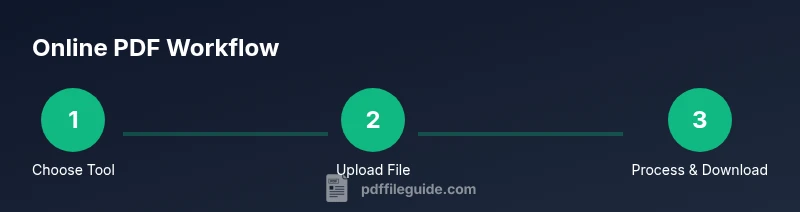
Imagine you receive a 25-page contract in PDF form that must be converted to Word for redlining. Start by choosing a reputable online tool with strong privacy terms. Upload the file on a secure network, then select the conversion to Word with high fidelity. After the conversion, review the Word document for formatting issues, reinsert any missing fonts, and save a local backup. If you need to compress the final PDF after edits, choose a baseline quality setting that preserves readability, then compare the compressed output to the original for legibility. Finally, remove the uploaded files from the service’s servers if the tool offers a delete-on-complete option. This flow minimizes risk while delivering fast results.
Best practices for privacy, data handling, and avoiding common pitfalls
To maximize safety when using pdf 2 online tools, always use a trusted provider with a clear privacy policy and data deletion guarantees. Avoid handling extremely sensitive documents on public Wi-Fi and consider using a VPN for extra security. Before uploading, remove any unnecessary metadata or personal identifiers from the PDF. When possible, enable two-factor authentication on your account and log out after processing. Keep a local copy on your device and consider keeping the output in a password-protected ZIP if you intend to share it. Finally, watch for watermarking or data collection practices that could compromise confidentiality, and prefer services that give you explicit control over what is stored and for how long.
Tools & Materials
- A device with internet access(Laptop, desktop, or tablet with up-to-date browser)
- A modern web browser(Chrome, Edge, Firefox, or Safari; keep updated)
- A reputable online PDF tool(Choose services with clear security and privacy policies)
- A PDF ready for processing(Original file you intend to upload)
- Optional VPN or secure network(Recommended for handling sensitive documents)
- Account credentials for the service(Some tools require sign-in for advanced features)
- A downloaded copy-backup(Keep a local backup before replacing the original)
- Two-factor authentication (2FA) on the service(Adds extra security)
- Consent or privacy notice review(Read terms, especially data handling)
Steps
Estimated time: 30-60 minutes
- 1
Define the task you want to accomplish
Identify whether you need to convert, edit, compress, or secure a PDF. This helps you pick the right tool and settings.
Tip: State the exact output format (for example, 'convert to Word, keep layout'). - 2
Choose a trusted online tool
Research options with clear privacy policies and review user feedback. Avoid obscure sites that request unnecessary permissions.
Tip: Prefer well-known brands and check for a privacy policy. - 3
Upload your PDF securely
Use a secure network, avoid public WIFI, and ensure you’re on the official site. If the tool supports password-protected PDFs, supply the password as needed.
Tip: Look for https and a lock icon in the address bar. - 4
Perform the task
Select the correct settings: format, quality, page range, etc. Execute the operation and compare results.
Tip: If converting, verify fonts and images match the original. - 5
Review and download
Open the output file to ensure accuracy. Save a local backup and delete your files from the browser’s cache if possible.
Tip: Verify file integrity with a quick visual check or checksum. - 6
Close session and purge traces
Sign out and clear browser data on shared devices.
Tip: Log out and close all tabs after download to minimize exposure.
Questions & Answers
What tasks can online PDF tools handle?
Online PDF tools commonly support conversion, editing, compression, merging, splitting, annotating, and form filling. Some services include OCR for scanned documents. Always verify supported formats and note any quality trade-offs.
Online PDF tools usually handle conversion, editing, compression, merging, and annotations. Check OCR support if you work with scans.
Are online PDF tools secure for confidential documents?
Security varies by provider. Look for HTTPS, data deletion guarantees, and explicit privacy policies. Avoid entering highly sensitive files on unsecured networks or on services with vague data handling terms.
Security depends on the provider. Use HTTPS, clear privacy terms, and delete data after processing.
Do I need an account to use online PDF tools?
Many online tools work without an account for basic tasks, but signing in can unlock features like batch processing, faster processing, or higher privacy controls. Review whether an account is required for your preferred features.
Some tools work without an account, others require one for extra features. Check the site's terms.
How should I protect my data when using online tools?
Use reputable providers with clear retention and deletion policies, work over secure networks, and remove sensitive metadata from PDFs before uploading. Always log out after processing on shared devices.
Use trusted tools with clear data deletion policies, and protect your network.
What should I do if the output looks different from the original?
If formatting shifts, try adjusting quality settings, choosing a different conversion option, or using a tool that preserves layout fidelity. Keep a backup copy in case you need manual adjustments afterward.
If output differs, tweak settings or choose another tool, and keep a backup.
Watch Video
Key Takeaways
- Evaluate security before uploading files
- Choose trusted tools with clear privacy policies
- Check output quality before saving
- Maintain local backups of originals and processed files