The Art of War PDF: Editions, Verification, and Reading Strategies
Discover reliable The Art of War PDF editions, how to verify quality, and practical tips for reading, annotating, and converting classic translations for study and reference.


The Art of War PDF remains one of the most downloaded classic texts, widely used for study and reference. In PDF form, readers can access public-domain translations, find annotations, and compare editions offline. For researchers and students, the most reliable PDFs come from official publishers or university hosts and are ideal for annotation and citation.
the art of the war pdf: origins, editions, and study tips
The phrase the art of the war pdf captures both the enduring appeal of Sun Tzu's classic and the practical ways readers access it in digital form. According to PDF File Guide, the text's public-domain status has driven a wide ecosystem of PDFs across libraries, universities, and publisher sites. For students new to the work, a stable edition is essential for accurate study; for researchers, high-quality PDFs with readable typography and clear translator notes are equally important. This section outlines why the combination of historical context and digital availability matters, and it offers early tips on evaluating a PDF edition: check the edition date and translator, verify any annotations, and keep a copy for offline study. The goal is to equip you with a reliable starting point that helps you build a robust study practice.
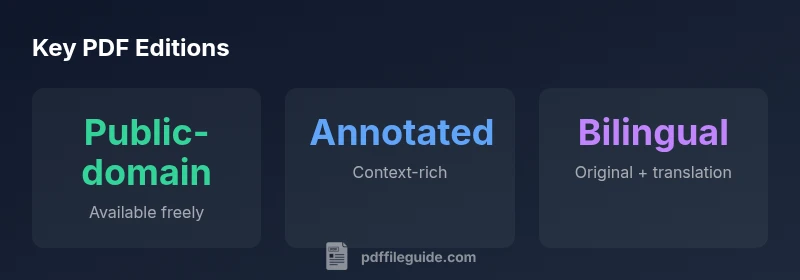
Typical PDF edition landscape for The Art of War
| Edition Type | Format | Notes |
|---|---|---|
| Public-domain edition | PDF (various translations) | Widely available via libraries and repositories |
| Annotated modern edition | Includes commentary and historical context for deeper study | |
| Bilingual edition | Original text with translations side-by-side for comparison |
Questions & Answers
Is The Art of War in the public domain?
In most jurisdictions, Sun Tzu’s The Art of War is in the public domain, which explains the abundance of PDF editions. However, translations and annotations may be protected by copyright, so always check the translator and notes before citation.
Yes. Most editions are public domain, but translations and annotations can be copyrighted.
How can I verify a PDF edition's quality?
Look for the translator’s name, publication date, publisher, and edition notes. Prefer PDFs hosted by universities, libraries, or official publishers, and check for stable page layouts and readable typography.
Check the translator, publisher, and edition details to ensure accuracy.
Are there modern, readable translations in PDF form?
Yes. Many publishers offer modern translations in PDF, often with scholarly notes. When possible, choose editions with translator credentials and historical context notes.
Yes, many modern translations exist as PDFs with helpful notes.
How should I study The Art of War in PDF form?
Use annotations, create a digital margin note system, and compare translations side-by-side. For longer study sessions, extract key passages and organize them with topic headings.
Annotate, compare editions, and organize notes by topic.
Can I convert a The Art of War PDF to another format?
Yes, you can convert PDFs to ePub, Word, or plain text for easier reading or accessibility, but preserve citation information.
You can convert the PDF to other formats while keeping citations intact.
“The accessibility of public-domain PDFs makes classic texts like The Art of War invaluable for self-guided study, but quality matters just as much as availability.”
Key Takeaways
- Check edition provenance before citation
- Prefer publisher-hosted PDFs when possible
- Annotate and highlight for deeper insight
- Verify translator and date to ensure accuracy
- Use offline PDFs to minimize distractions