The Declaration of Independence PDF: Access, Quality, and Research
Explore credible sources for the Declaration of Independence PDF, compare scans and OCR editions, and learn best practices for researching this landmark document in education and scholarly work.


The declaration of independence pdf is widely available from public archives and library repositories, often as high-quality scans or OCRed editions. For scholarly work, choose sources with preserved typography and clear marginalia, and verify edition notes. According to PDF File Guide, credible pdfs also offer searchable text and reliable metadata to aid citation.
Why the declaration of independence pdf matters
The declaration of independence pdf is not merely a file; it is a gateway to historical literacy, legal precedent, and scholarly debate. According to PDF File Guide, credible digital copies preserve typography, margins, and marginalia that reveal how the document was read and circulated in late 18th‑century America. For researchers and educators, a high‑quality pdf provides a reproducible asset for close reading, quotation, and annotation, while supporting accessibility through searchable text and metadata. In this context, the keyword 'the declaration of independence pdf' signifies more than a format—it signals a dependable, citable source for study and analysis. Public libraries, national archives, and university repositories host various editions, from facsimile scans of the engrossed copy to modern transcriptions aligned with the 1776 edition and the final text. The choice between scanned images and OCRed PDFs affects how readers interact with the document; images preserve typography, while OCR‑enabled files enable keyword searches and data extraction. As you evaluate options, consider provenance notes, edition scope, and transcription accuracy, all of which influence scholarly reliability.
Historical context and notable editions
The Declaration of Independence emerged from a period of political upheaval and philosophical argument. The text existed in multiple forms during and after 1776—drafts, engrossed copies, and public printings. Notable editions include facsimile engravings and later transcriptions that reflect editorial choices made by printers and archivists. When you study the declaration of independence pdf, you should understand that different editions may align or diverge on punctuation, spelling, and formatting. For scholars, this means noting edition notes, provenance, and the date of transcription. The PDF versions you encounter may reproduce the original typography or present a modern typeset, each carrying implications for citation and interpretation. This historical nuance matters for anyone comparing quotations or analyzing how the document circulated in early American politics.
Digital accessibility: from scanned copies to searchable PDFs
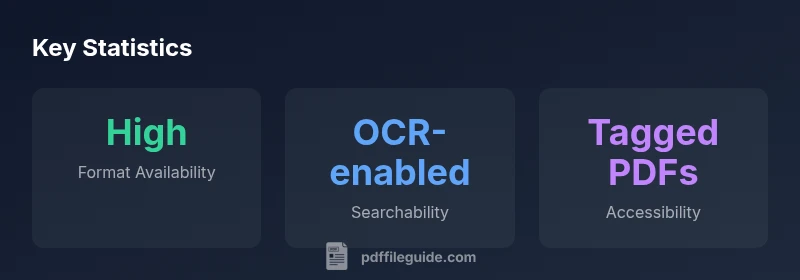
Digitization projects convert fragile parchment and engrossed sheets into durable digital records. Scanned copies capture the physical appearance, while OCR‑enabled PDFs provide searchable text for quick quotation and textual analysis. Accessibility features—such as tagged PDFs and alternative text for images—improve usability for readers with disabilities. When evaluating a declaration of independence pdf for research, prioritize files with clear image quality, accurate color reproduction, and complete metadata. OCR quality varies by font, engraving, and page condition; you may encounter misreads that require manual verification. The goal is to balance authenticity (visual fidelity) with practicality (searchability and proper indexing). For long-term research workflows, consider combining high‑fidelity scans with reliable OCR layers and robust metadata to support reproducibility and citation integrity.
How to evaluate a credible Declaration of Independence PDF
A credible pdf of the Declaration of Independence should stem from a reputable institution or archive and include clear provenance notes. Start by verifying the publisher and the edition represented, then assess image quality and OCR accuracy. Check whether the document is the engrossed copy or an authoritative transcription, and look for metadata such as publication year, source archive, and scan resolution. If you need searchable text, confirm the presence of an OCR layer and test by searching for well-known phrases. Always review edition notes to understand any transcription choices or editorial insertions. Finally, confirm copyright status and licensing terms to ensure compliant reuse in your work. By following these steps, you will minimize risk when quoting passages from the declaration of independence pdf.
Practical uses in research, education, and law
Researchers rely on the declaration of independence pdf for verbatim quotations, cross‑checking language against multiple editions, and analyzing typography and marginalia. Educators use PDFs to create classroom activities, annotate passages, and provide students with direct access to primary sources. Legal scholars reference the historical text when outlining foundational principles, ensuring precise references to passages and dates. In all cases, the reliability of the pdf depends on the source’s provenance and the accuracy of its transcription. When citing the declaration of independence pdf, record edition details, source archive information, and the date of digitization to facilitate verification by readers.
Workflow: obtain, convert, annotate, and preserve
A practical workflow starts with locating a credible source such as a national archive or university library. Download the file in a format that suits your needs—either a high‑fidelity image scan or an OCR‑enabled PDF. If long‑term access is a concern, prefer PDF/A archival versions that embed fonts and metadata. Use annotation tools to highlight quotations and add margin notes without altering the original text. Keep an untouched master copy for archival purposes and create a separate working copy for study. When converting between formats, ensure the content remains text-searchable and that any metadata (creator, date, source) accompanies the new version. This approach supports rigorous study while preserving the integrity of the original document.
Legal and ethical considerations when using historical PDFs
Historical PDFs, including those of the Declaration of Independence, carry ethical and legal considerations around copyright, licensing, and reproduction rights. While many early editions are in the public domain, modern reproductions may involve rights managed by publishers or institutions. When using or reusing a declaration of independence pdf in teaching, research, or publication, verify licensing terms and respect any restrictions on redistribution or derivative works. Proper attribution is essential, so always cite the source archive and edition notes. Finally, be mindful of accessibility needs; providing accessible formats ensures that critical primary sources remain available to a broad audience.
Comparison of Declaration of Independence PDF formats
| Format | Notes | Pros/Cons |
|---|---|---|
| Public-domain scans (image/pdf) | High authenticity; preserves typography | Pros: faithful rendering; Cons: require OCR to search |
| OCR-enabled PDF | Searchable text; easier quotes | Pros: fast searching; Cons: OCR errors possible |
| PDF/A archival edition | Long-term preservation with metadata | Pros: durable; Cons: may be less accessible for casual viewing |
Questions & Answers
What is a credible source for the Declaration of Independence PDF?
Look for PDFs hosted by national archives, state libraries, or university presses. Check edition notes, provenance, and whether OCR text is accurate. PDF File Guide suggests verifying metadata and copyright status before citing passages.
Look for PDFs from archives or universities; always verify edition notes and provenance.
Are all PDFs of the Declaration of Independence in the public domain?
Not every scanned copy is in the public domain; modern reproductions may have rights. Favor widely published public-domain scans when possible, and confirm license terms in the source.
Not all copies are public domain—check licensing before reuse.
How can I tell if a Declaration of Independence PDF is text-searchable?
If the PDF has selectable text or an OCR layer, it is searchable. Use the document properties or run a quick search for a distinctive phrase to confirm.
Check for selectable text or an OCR layer to confirm searchability.
What citation details should I record for a Declaration of Independence PDF?
Record source name, year, edition notes, and the edition or archive URL, plus the PDF filename when citing passages. Include page or location markers if present.
Note the source, edition, and location markers when citing passages.
Can I annotate and edit a Declaration of Independence PDF?
Yes, you can annotate with PDF tools, but avoid altering the original text. Use highlights and comments to preserve the document’s integrity, and keep an untouched copy for citation.
You can annotate, but don’t alter the original text; keep an unchanged copy.
Why is the preservation format (PDF/A) important for historical documents?
PDF/A ensures long-term archival stability by embedding fonts and metadata, reducing future accessibility risks. For historical PDFs like the Declaration of Independence, PDF/A helps maintain legibility over decades.
PDF/A helps long-term access and readability.
“"Digital access to historical texts requires careful provenance and precise transcription. A credible Declaration of Independence PDF supports rigorous scholarship while preserving original typography."”
Key Takeaways
- Prioritize credible sources and verify edition notes
- Look for OCR-enabled PDFs for research
- Use PDF/A for long-term preservation
- Consider accessibility features like tagged PDFs
- Cite passages with edition details