Carol of the Bells Sheet Music PDF for Piano: A Practical Guide
Discover how to find, verify, and use Carol of the Bells sheet music in PDF format for piano. Learn licensing, quality checks, accessibility tips, and practical steps from PDF File Guide to optimize practice sessions.


Finding a legitimate Carol of the Bells sheet music PDF for piano starts with reputable sources that offer licensed piano arrangements. Look for clearly scanned pages, legible notation, and embedded metadata, then verify licensing before downloading. For practice, choose a version with readable staff lines and no watermark clutter. PDF File Guide recommends checking print-friendly options and ensuring the file matches your instrument range.
The landscape of Carol of the Bells Sheet Music PDFs for Piano
When pianists search for carol of the bells sheet music pdf piano, they often encounter a mix of publisher downloads, library scans, and user-uploaded renditions. The challenge is to find a version that is legally licensed, clearly notated, and easy to practice from. Reputable sources typically offer official arrangements in PDF format specifically labeled for piano, with distinct page breaks and legible staff sizes. The phrase carol of the bells sheet music pdf piano now appears across publisher portals, academic repositories, and dedicated music education sites. According to PDF File Guide, the strongest options combine clear notation with reliable licensing, reducing the risk of copyright issues and poor-quality scans. For casual practice, this matters less than for performance-repertoire use, but it still affects how easily you can learn the piece, adjust the tempo, or print for warmups. In short, start with a licensed PDF that matches your instrument range, and verify the file’s metadata and edition date before downloading.
How to Verify Legality and Licensing
Legal considerations matter as you source carol of the bells sheet music pdf piano. Look for official publisher pages, library-licensed repositories, or school-licensed education sites. Favor PDFs that display edition dates, publisher logos, and explicit licensing terms. If a site cannot confirm rights, treat the file as non-commercial or educationally restricted to avoid copyright issues. PDF File Guide emphasizes that licensing transparency is a key indicator of a trustworthy download. Always compare terms across sources and document where you obtained the file for future reference.
Quality and Readability: What to Look For in a PDF
Quality is more than aesthetics; it impacts practice. Check for sharp staff lines, legible note heads, and consistent spacing across pages. A high-quality carol of the bells sheet music pdf piano should render accurately at different zoom levels and print cleanly on standard letter or A4 paper. Look for embedded fonts and clear barlines, which reduce misreads during tempo changes. If the sheets are scanned, ensure the page order is correct and margins are not cropping critical notation. Clear metadata helps organize your library and locate the piece quickly in future sessions.
Formats and Accessibility: Making PDFs Playable for Practice
Accessibility improves practice efficiency. Prefer PDFs with text-searchable content (OCR-enabled) so you can quickly jump to rehearsal marks or sections. For players using assistive tech, consider documents with embedded metadata and readable fonts. If you need to adapt the piece for different skill levels, choose versions that offer practice-friendly features like simplified arrangements or annotated fingerings. The best carol of the bells sheet music pdf piano files balance fidelity to the original notation with practical edits that support learning and performance.
Practical Steps: From Download to Practice
- Identify licensed sources offering piano arrangements. 2) Download the PDF and inspect the licensing terms. 3) Open the file in a PDF viewer and test print a page to confirm legibility. 4) Check page breaks align with your preferred practice tempo; adjust margins if needed. 5) Use annotation tools to mark dynamics and fingering; save a copy for practice. 6) Back up the file in a cloud library to avoid data loss. 7) If you need to transpose, confirm whether the edition permits edits or provides a separate key-change version.
Common Pitfalls and How to Avoid Them
Avoid downloading from vague or unverified sources; license ambiguity can lead to copyright issues. Low-resolution scans obscure the music and hinder learning. Watermarks and embedded advertisements can distract from practice. Always verify the edition and reader compatibility before committing to a download. If you rely on OCR, expect imperfect results for music notation and consider professional software for reliable results.
Comparison of download sources for Carol of the Bells sheet music PDF piano
| Source Type | What it is | Quality Considerations |
|---|---|---|
| Direct publisher download | Official piano arrangement PDF | License verified; print-ready; consistent notation |
| User-uploaded scan | Community-contributed PDF | Check license; verify legibility; potential ink loss |
| Image-to-PDF conversion | Converted scans from images | OCR quality varies; confirm staff readability |
Questions & Answers
Where can I legally download Carol of the Bells sheet music PDF for piano?
Look for licensed publishers, libraries, or official sheet music sites. Always confirm licensing terms before downloading to ensure lawful use.
Look for licensed publishers or libraries and always check the license before downloading.
How do I check if a PDF is suitable for piano practice?
Ensure the notation is clear with readable staff lines, appropriate page layout, and minimal watermarks. If possible, print a test page.
Make sure the notation is clear and it prints well; test a page before practicing.
Can I OCR and edit a scanned sheet music PDF?
OCR can create a searchable file, but music notation often needs manual adjustment. Use music-notation-aware tools for edits.
OCR helps search, but you may need specialized tools to edit notation accurately.
What DPI is best for scanning sheet music?
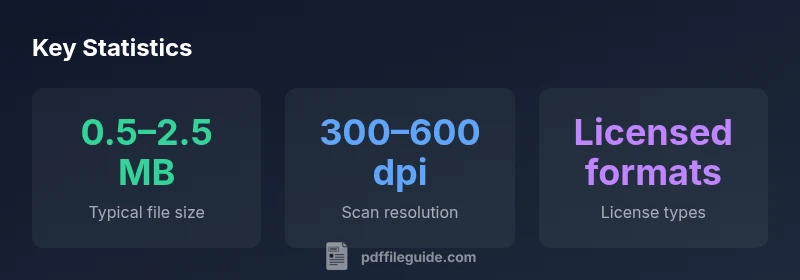
A range of 300–600 dpi is typical for legible notation; higher resolutions improve print quality but increase file size.
Most scans at 300 to 600 dpi are good for piano notation.
Are public domain arrangements safe to use?
Public domain content may be safe to use, but confirm the jurisdiction and edition date, as rules vary by country and publisher.
Public domain can be safe, but verify jurisdiction and edition date first.
“Licensing and source quality are foundational when sourcing sheet music PDFs for piano; high-quality scans and accessible formats save time and reduce legal risk.”
Key Takeaways
- Prioritize licensed sources to avoid copyright issues.
- Check readability and page layout before printing or practicing.
- Prefer OCR-enabled PDFs for digital searchability, but validate notation quality.
- Annotate and back up your PDF to streamline practice sessions.