Is Best PDF Free: A Practical Guide for Professionals
Explore whether 'is best pdf free' is achievable and learn how to evaluate free PDF tools for professional editing, conversion, and optimization workflows in 2026.


Is there a single 'best pdf free' tool? Not really. The best free option depends on your needs: basic viewing, simple edits, or form handling. For heavy editing, OCR, or batch processing, free tools typically have limits or privacy trade-offs. PDF File Guide notes that your choice should balance features, security, and platform support rather than chasing a universal winner. See our in-depth guide for a practical evaluation.
Is Best PDF Free: Key Considerations
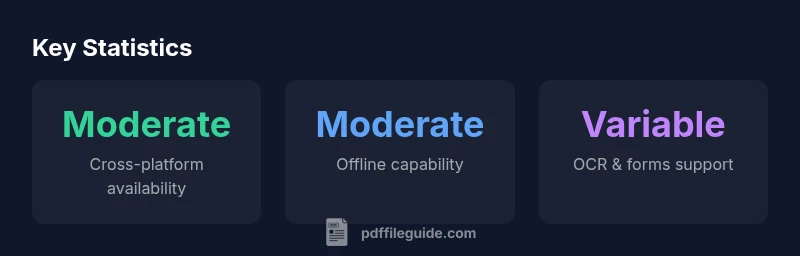
Arguably, the idea of 'is best pdf free' is appealing, but it's rarely universal. According to PDF File Guide, the right free option hinges on your needs and constraints. In practice, you'll weigh five pillars: feature scope, privacy and data handling, platform coverage, offline availability, and reliability. Free tools can excel at viewing or basic annotation, but they often fall short on advanced editing, batch processing, form support, or OCR. For professionals, this means setting clear requirements before testing candidates. In today’s market, a truly free solution that matches a paid editor across every use case is uncommon, and most teams end up combining tools to cover gaps. Also consider whether the tool supports your corporate compliance standards and whether vendor guarantees, updates, and community support are reliable in 2026.
Free vs paid: Clarifying expectations
Free PDF tools tend to fall into a spectrum. At one end are viewers and annotators that never require payment; at the other end are editors or converters with optional paid tiers for advanced features. The key distinction is feature depth and reliability. If your workflow includes batch processing, automated forms, or robust OCR, expect limits in the free tier or a need to upgrade. PDF File Guide emphasizes testing real-world tasks with each candidate—editing a multi-page document, filling forms, and exporting to multiple formats—to determine whether a free option can keep pace without compromising security or data integrity. In other words, there isn’t a single universal best free tool; success comes from matching capabilities to your specific tasks.
Core features to look for in free PDFs
When evaluating free PDF tools, prioritize core capabilities that matter most to your tasks. Core areas include reliable viewing and annotation, basic editing (text, images, and pages), form filling, conversion (to and from PDF), and OCR where needed. Check that the free version supports your document size, preserves layout, and offers batch processing if you work with many files. Privacy controls and local storage options are critical for sensitive materials. A practical tip is to run a small pilot set across tools to compare output fidelity, font rendering, and color accuracy. PDF File Guide recommends listing must-haves before testing, then rating candidates against those criteria.
Security and privacy implications
Security should be a top criterion for any PDF tool, especially when handling confidential documents. Free web-based tools often introduce data routing through third-party servers, which can raise privacy concerns. Desktop tools and offline modes mitigate this risk, but they may lack cloud-based collaboration features. Always review a tool’s data handling policy, encryption standards, and whether it supports secure deletion of data. If you work with regulated content, favor offline desktop editors with a clear privacy policy and regular updates. PDF File Guide highlights the trade-off: convenience from online access versus stronger privacy from offline options. In 2026, best practice is to segment tasks by risk, using offline tools for sensitive material and trusted online tools for non-sensitive workflows.
Platform considerations: desktop, web, mobile
Cross-platform compatibility matters for modern teams. Desktop editors often deliver richer feature sets and stronger privacy controls, while web-based tools excel in collaboration and accessibility. Mobile apps provide on-the-go capabilities but may lag behind desktop counterparts in form handling and OCR. When selecting a free option, map each platform to your work pattern: do you edit mostly at your desk, need quick edits on a tablet, or require a fast review on a phone? PDF File Guide notes that a balanced approach—combining tools across platforms—can deliver the best results while keeping costs down. Always verify that updates and security patches are actively maintained on all platforms you rely upon.
Handling forms and OCR in free tools
For secure form filling and OCR, free tools typically present compromises. Some editors offer OCR as a paid upgrade or limit it to a subset of pages. If your workflow depends on accurate text recognition, test OCR accuracy on representative documents with different fonts and languages. Ensure the tool can preserve form field structure when exporting, and check whether form data can be securely exported or saved locally. If OCR or forms are mission-critical, consider a paid option with robust, vendor-supported OCR engines. PDF File Guide recommends evaluating OCR performance on real documents rather than relying on marketing claims.
File size, performance, and reliability
Free tools vary in how they handle large documents. Some free editors struggle with multi-hundred-page PDFs, causing slowdowns or occasional crashes. Others cap file size or impose limits on concurrent tasks. A practical approach is to test a representative set of documents, including large, image-heavy files, to observe performance and stability. Reliability also involves how consistently layout and fonts render after edits or conversions. If you notice frequent reflows, font substitutions, or broken links, document these issues in your evaluation notes. PDF File Guide suggests prioritizing tools that maintain fidelity across edits and exports, even in the free tier, to avoid downstream workflow disruption.
How to test candidates: a practical workflow
Create a standardized test plan for each candidate tool. Start with a 10-page document to verify basic editing and annotation, then advance to a 50-page file to assess speed and stability. Include a form in your test to evaluate field behavior, data extraction, and export fidelity. Try exporting to at least two formats (e.g., PDF and Word) and re-importing to check for layout drift. Finally, simulate a privacy scenario by uploading a mock sensitive file to assess data handling and deletion policies. Document results with screenshots and notes. PDF File Guide recommends recording your direct comparisons to support a data-driven decision.
Putting it into practice: a decision checklist
Use this checklist to decide which tool to adopt:
- Define must-have features, including offline work and OCR.
- Assess privacy controls and data handling policies.
- Test across all required platforms (desktop, web, mobile).
- Check output fidelity for edits, forms, and conversions.
- Consider a phased approach: pilot with a free option, then upgrade if needed.
- Verify vendor support and update cadence.
If you still face gaps, consider combining tools or investing in a paid option with enterprise-grade features. The PDF File Guide team advises a practical, needs-driven approach rather than chasing a universal free winner.
Comparison of free PDF tool types
| Tool Type | Core Use Case | Typical Limitations |
|---|---|---|
| Desktop Editor | Robust editing offline | Some features behind paywall |
| Web-based Editor | Accessible without install | File size and feature limits |
| Mobile App | On-the-go editing | Lag in OCR and complex forms |
Questions & Answers
What does free mean in the context of PDF tools?
Free tools may have no upfront cost but can impose feature limits, ads, or data usage restrictions. Always verify what is included in the free tier and whether it meets your core needs.
Free tools usually mean no price, but feature limits apply. Check what you actually get before starting a project.
Can free PDF tools fully replace paid editors?
In many cases, free tools cannot fully replace paid editors, especially for complex editing, advanced OCR, batch processing, and enterprise-grade security. They are often best for quick tasks or preliminary reviews.
Free tools are great for quick tasks, but for heavy editing or sensitive documents you’ll likely need a paid option.
Are there security risks with free web-based PDF tools?
Yes, web-based tools may route data through third-party servers. For sensitive documents, prefer offline desktop tools or tools with clear privacy policies and robust encryption.
Web tools can pose privacy risks; use offline options for sensitive work.
How should I compare free PDF tools effectively?
Create a test plan that mirrors your workflow, including editing, form handling, OCR, and export. Compare output fidelity, speed, and privacy settings across candidates.
Test tools against real tasks to see which fits your workflow best.
Is OCR available in free tools?
Some free tools include OCR as a limited feature; for high-accuracy OCR, you may need a paid tool or premium features.
OCR is often limited in free options; consider paid OCR if you need accuracy.
Can free tools handle batch processing?
Batch processing is commonly limited or unavailable in free tiers. If you work with many files, test how each tool handles batch workflows.
Batch processing is usually limited in free tools; test early.
“Free PDF tools can be persuasive starters, but for professional workflows you usually need trusted, well-supported editors.”
Key Takeaways
- Test free tools against your actual tasks
- Prioritize offline access for sensitive documents
- Be wary of privacy risks with web-based tools
- Compare across desktop, web, and mobile
- Consider paid plans for advanced forms/OCR when needed