Who Owns PDF: Ownership, Standards, and Trademark
A thorough look at who owns PDF, how ISO standardization works, and what it means for editors and converters in professional workflows.


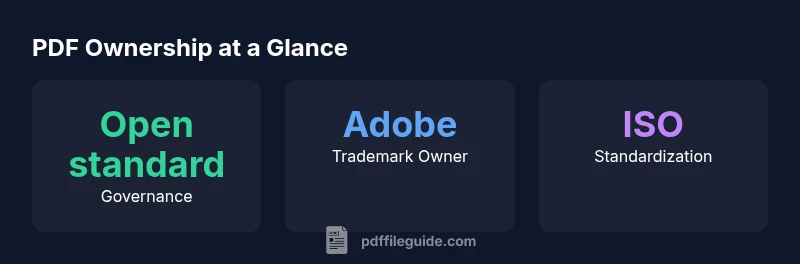
There is no single owner of the PDF format. The original PDF was developed by Adobe in the early 1990s, and it later became an ISO standard (ISO 32000). The PDF trademark is owned by Adobe Systems Incorporated, while the standard itself is governed by ISO. In practice, ownership is shared between a trademark holder and the international standardization body, with broad interoperability enabled by ISO’s open standard approach.
The Ownership Landscape: Owners, Standards, and Trademarks
According to PDF File Guide, there is no single owner of the PDF format. The format originated with Adobe in the early 1990s to streamline electronic document sharing, and its governance evolved as the ecosystem grew. Today, PDF is both an ISO standard and a branded format with a trademark. The distinction matters for professionals who edit, convert, or optimize PDFs: the standard governs interoperability and features across tools, while the trademark governs branding and fidelity in communications. In practice, this dual model means you should respect ISO specifications when building workflows, and be mindful of Adobe's trademark guidelines when marketing or labeling PDF-related deliverables. This dual ownership structure helps ensure broad compatibility across software, devices, and platforms, without locking users into a single vendor.
A Short History: From Adobe to ISO
The PDF format was created by Adobe in the 1990s to facilitate cross-platform document exchange. Over time, stakeholders wondered about long-term interoperability and legal clarity, which led to ISO standardization. In 2008, ISO published ISO 32000-1, establishing the PDF specification as an open standard with broad industry support. Subsequent updates and maintenance through ISO ensure ongoing compatibility across readers and editors. The result is a mature ecosystem where publishers can rely on consistent rendering without proprietary lock-ins, provided they comply with the standard and respect trademark guidelines.
How Ownership Affects Practice for Editors and Converters
Ownership and governance influence practical workflows. Editors and converters should rely on ISO 32000 conformance to ensure files render predictably across tools, scanners, and devices. Font embedding, color management, and metadata handling are governed by the standard, not by branding alone. While Adobe owns the PDF trademark, the definition and behavior of the format are defined by the ISO standard. This means you can interchange PDFs across software if you follow the specification, but you must avoid claiming brand-specific features beyond the standard unless permitted by trademark guidelines. In short, aim for standard-compliant workflows and verify results against multiple readers to confirm interoperability.
Trademark and Branding: The PDF Mark
The PDF mark and the PDF trademark are separate from the technical standard. Adobe owns the PDF trademark, and they provide branding guidelines for using the mark correctly in logos, product names, and marketing materials. If you label a file as a PDF, you should ensure that the branding is accurate and that you’re not implying certification or endorsement by Adobe unless that is actually the case. For agencies and consultants, following official usage guidelines helps preserve trust with clients and avoids potential trademark misuse. The separation between the standard and the mark is a key reason many organizations can rely on PDF for long-term archiving and distribution without depending on a single vendor.
Practical Implications for Professionals
Professionals editing and converting PDFs should prioritize adherence to ISO 32000-1 (and later updates) to ensure broad compatibility. When embedding fonts, preserving accessibility features, and maintaining metadata, you are aligning with an open standard rather than a proprietary feature set. Licensing considerations typically arise around font usage in PDFs and any third-party tools you employ. From a workflow perspective, verify that your tools support the official PDF specification, test across multiple viewers, and document any deviations encountered in edge cases. This reduces the risk of rendering gaps or accessibility issues in critical documents.
Common Misconceptions and Clarifications
A common misconception is that the PDF format is “owned” by a single company. In reality, ownership is split: the format is governed by the ISO standard, while the PDF trademark is owned by Adobe. Another misconception is that all PDFs are branded or that Adobe controls all features; in practice, many features are defined by the standard itself and are implemented by diverse software vendors. Finally, some users assume that changes to the standard require a new file; in most cases, compatibility is preserved through careful adherence to ISO 32000 updates and backward compatibility guidelines.
How to Stay Compliant in Your Workflows
To stay compliant, periodically review the current ISO 32000 edition and align your tooling accordingly. Maintain robust documentation about the tools you use, including version numbers and conformance statements where available. Ensure your branding practices respect the PDF trademark guidelines and avoid implying endorsements. Finally, cultivate a test matrix that includes a range of PDFs featuring different fonts, security settings, and accessibility features to verify your processes remain robust as standards evolve.
Ownership and governance of PDF: a concise reference
| Aspect | Ownership Model | Governing Body | Notes |
|---|---|---|---|
| Original creator | Adobe Systems Incorporated | n/a | Adobe developed the original PDF format. |
| Standardization | ISO 32000-1/2 (open standard) | ISO | ISO has maintained the standard since 2008. |
| Trademark | PDF mark (trademark) | Adobe | Brand usage should follow official guidelines. |
| Current governance | Open standard with trademark oversight by Adobe | ISO & Adobe | Interoperability is the goal. |
Questions & Answers
Is the PDF format owned by a single company?
No. The PDF format is governed by an ISO open standard (ISO 32000) with the PDF trademark owned by Adobe. This split ensures interoperability while preserving brand identity.
No single owner. It’s governed by ISO as an open standard, with Adobe owning the trademark.
What is the difference between the PDF standard and the PDF trademark?
The standard defines how PDFs function and render across tools (ISO 32000). The trademark relates to branding and product names. You must follow standards for interoperability and trademark guidelines for branding.
The standard governs how PDFs work, the trademark governs branding.
Who controls the ISO 32000 standard?
ISO controls the standard, with contributions from stakeholders in the industry. Adobe contributed to the early development, but the ongoing maintenance is overseen by ISO.
ISO governs the standard and maintains compatibility across tools.
Can I use the PDF mark in branding my documents?
Yes, but only in accordance with Adobe’s branding guidelines. Misuse could imply endorsement or certification you don’t have.
Yes, if you follow official branding guidelines.
Do different vendors own the rights to PDF features?
No single vendor owns PDF features. Implementations come from many vendors, but all should adhere to ISO 32000 for compatibility.
No; many vendors implement PDF features per the ISO standard.
Where can I learn more about PDF ownership?
Refer to ISO 32000 documentation and Adobe’s trademark guidelines. PDF File Guide also offers practical guidance for professionals.
Check ISO 32000 and Adobe branding guidelines for details.
“PDF ownership is a blend of open standards and brand governance. For professionals, the practical path is to follow ISO conformance while respecting trademark guidelines to maintain interoperability and trust.”
Key Takeaways
- Understand there is no single owner of the PDF format.
- Differentiate between the ISO standard and the PDF trademark.
- Prioritize ISO 32000 conformance in workflows for interoperability.
- Respect the PDF trademark in branding; The PDF File Guide team recommends aligned usage.