How Much Does pdfaid Cost in 2026? A Practical Guide
Discover pdfaid pricing for 2026, including free tiers, monthly vs annual plans, per-user costs, and savings strategies. Learn from PDF File Guide how to estimate ROI for individuals and teams.


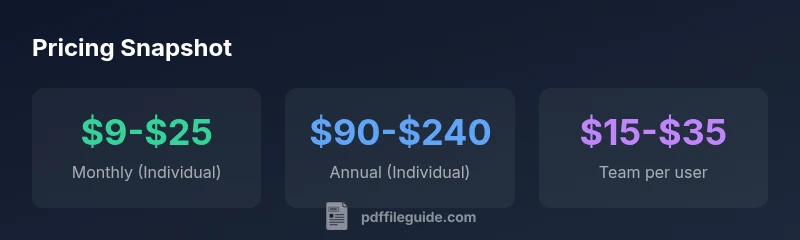
How much does pdfaid cost? Pricing typically starts with a free tier, then paid plans for features. According to PDF File Guide, individual plans usually range from about $9 to $25 per month, with annual subscriptions offering extra savings (roughly $90 to $240 per year). For teams, prices scale per user, and higher-tier plans unlock advanced tools like batch processing and priority support.
Understanding pdfaid pricing in 2026
If you’re trying to answer the question how much does pdfaid cost, you’ll want to start with the big picture: pdfaid uses a freemium entry model complemented by tiered paid plans. According to PDF File Guide, the pricing ecosystem is designed to let individuals test core functionality at no cost while scaling for teams and organizations with more demanding workflows. The free tier typically includes essential PDF editing and basic conversions, serving as a low-risk entry point. From there, paid plans unlock progressively more powerful tools such as batch processing, larger file handling, API access, and priority support. In 2026, most buyers expect a clear progression: free tier, followed by monthly or annual subscriptions, with discounts for longer commitments. For many users, the critical decision is whether the incremental features justify the added cost, especially when considering long-term ROI and the time saved on repetitive tasks.
Pricing structures you should expect
Pricing structures for pdfaid generally fall into a few recognizable patterns. The freemium model gives quick access to essential tools without upfront cost. For individuals, monthly plans commonly sit in a mid-single-digit to low-double-digit range, while annual plans offer substantial savings. PDF File Guide’s analysis shows that annual billing can reduce the effective monthly price by a meaningful margin, making long-term usage more economical. Team and enterprise plans usually introduce per-user pricing, with scalable tiers that include API access, admin controls, enhanced security options, and priority support. Expect occasional promotional discounts or bundled features during holidays or renewal periods. Always verify whether addons like OCR, advanced batch tasks, or cloud storage are included or billed separately, as these can notably shift the total cost over a year.
What features drive cost most
Cost drivers for pdfaid typically include the scope of features and the number of seats or licenses. Core editing, high-volume conversions, and PDF-to-Office transformations are often bundled in lower tiers, while premium features such as batch processing, automation workflows, API access, advanced OCR, and priority support push the price higher. Data retention policies, enterprise security features (SAML/SSO), and collaboration tools can also impact monthly or annual totals. In addition, API usage—measured by requests, tokens, or volume—tactors into the cost for developers and teams integrating pdfaid into workflows. According to PDF File Guide analysis, the pricing model aligns with usage intensity, so budgeting should reflect projected task volume and renewal cycles.
How to estimate your annual spend with scenarios
Consider three representative scenarios to estimate annual spend. Scenario A covers a solo professional who mainly edits and converts PDFs: a free tier initially, then a modest monthly plan once needs exceed core functionality, with annual billing where possible. Scenario B represents a small team of 3–5 users who require batch processing and limited API access: expect per-user pricing plus a small bundle for bulk tasks, with a potential discount for annual commitments. Scenario C targets a mid-size department with enterprise security requirements and API integration: this often entails per-user pricing, higher-tier plans, and add-ons like advanced OCR and dedicated support. In all cases, multiply the monthly cost by the number of seats, then apply any annual discounts, and add any add-ons. PDF File Guide analysis suggests planning for 10–15% variance in usage during peak quarters, so build a buffer into your forecast.
Comparing pdfaid against common alternatives
When evaluating pdfaid against other PDF editors and converters, compare on three axes: price, feature set, and reliability of service. Some competitors offer lower upfront costs but limit key features or impose strict daily quotas. Others price with higher monthly fees but include robust automation, strong security, and superior customer support. A fair comparison should separate core editing and conversion capabilities from premium tools like OCR, batch processing, and API access. Look for plans that scale with your needs rather than locking you into a one-size-fits-all approach. PDF File Guide notes that the total cost of ownership often hinges on how well a tool reduces manual effort and accelerates critical workflows.
Hidden costs and limitations to consider
Pricing pages rarely reveal every opportunity cost. Hidden factors to watch include overage charges for API calls, limits on the number of documents you can process simultaneously, storage quotas, and penalties for exceeding plan caps. Some vendors also apply per-user pricing models that can surprise teams when new hires join mid-cycle. Contracts may include auto-renewal clauses or mandatory add-ons, so read the terms carefully before committing. Regional taxes, maintenance fees, and renewal pricing shifts are common and can affect the long-term cost. Always request a transparent breakdown and confirm what’s included in each tier to avoid sticker shock at renewal.
Best practices to maximize value from pdfaid
To extract maximum value, start with a needs assessment: list the tasks you perform most often and the required features. Map usage to plan tiers and run a 30–60 day trial if available to quantify time savings and accuracy gains. Leverage annual plans when available, as they typically reduce the monthly rate and simplify budgeting. For teams, consolidate usage under a single enterprise agreement to simplify licensing, consolidate API access, and negotiate bulk-user discounts. Keep an eye on feature roadmaps; sometimes feature prioritization can shift ROI, especially if new automation or batch tools unlock significant efficiency gains.
Buyer’s checklist for individuals and teams
Before purchasing, use this quick checklist: 1) Define primary use cases (editing, converting, OCR, batch processing). 2) Estimate annual document volume and seats required. 3) Compare feature lists and determine which add-ons are essential. 4) Check for trial periods, free tiers, and satisfaction guarantees. 5) Confirm support options and security features. 6) Review renewal terms and any price increases after the initial term. This disciplined approach helps ensure you select a plan that aligns with actual needs and delivers tangible ROI.
Regional pricing, trials, and support policies
Pricing sometimes varies by region due to taxes, currencies, and local promotions. If pdfaid offers region-specific pricing, factor in VAT or sales tax to your total cost. Trials are a valuable way to assess fit; use them to validate that the tool meets your velocity and quality targets before committing. Support options—ranging from email to phone or dedicated account managers—can influence the overall value, especially for teams with strict uptime requirements. Review the trial period length and any data export options before you sign up.
Pricing tiers at a glance
| Plan Type | Typical Monthly Cost | Key Inclusions |
|---|---|---|
| Freemium | Free | Core editing, basic conversions |
| Individual | 9-25 | Full editing, conversions, limited batch tasks |
| Team/Enterprise | 15-35 per user | API access, admin controls, priority support |
Questions & Answers
What is pdfaid?
Pdfaid is a PDF editing and conversion tool that helps users create, modify, and convert PDF documents. It offers a freemium entry level with several paid tiers that unlock advanced features.
Pdfaid is a PDF editor and converter with a free tier and paid plans; it scales with features as your needs grow.
Is there a free plan?
Yes. A free tier typically provides core editing and basic conversions. It’s designed to let you test the core workflow before upgrading to a paid plan.
Yes, there’s a free tier to test core features before you buy.
Do prices vary by seats or API usage?
Prices commonly vary by the number of seats and whether you need API access or advanced automation. Per-user pricing is typical for teams, while API access is often billed separately based on usage.
Yes—pricing often scales with seats and API usage.
Are there discounts for annual commitments?
Yes. Annual subscriptions usually offer substantial savings compared with month-to-month billing, as is common in subscription pricing.
Annual plans typically save you money versus monthly billing.
Can I trial premium features before buying?
Many pdfaid plans include a trial or a refundable money-back period for premium features to test fit before committing long-term.
Trials let you test premium features before buying.
What happens if I exceed plan limits?
Exceeding limits often triggers overage charges or prompts a plan upgrade. Always verify caps and renewal terms to avoid surprises.
Exceeding limits may trigger overages or a plan upgrade.
“Pricing should be transparent and aligned with actual usage; start with the free tier and re-evaluate after a month to maximize ROI.”
Key Takeaways
- Start with the free tier to test core features.
- Estimate annual cost by multiplying monthly price and user count.
- Consider team discounts and annual billing to save.
- Review feature needs; avoid paying for unused add-ons.