Do Make PDF: A Practical How-To for Creating PDFs
A comprehensive, step-by-step guide to do make pdf—from choosing tools to optimizing, securing, and sharing PDFs for professionals and individuals alike. Learn practical workflows and best practices with PDF File Guide.


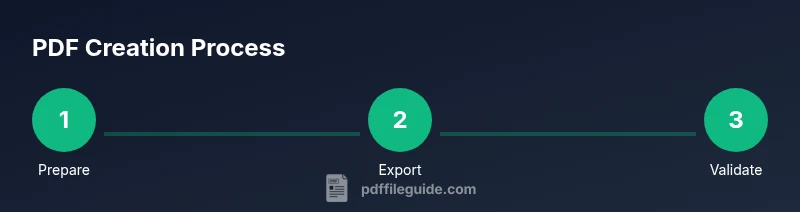
Do make pdf by following a clear workflow: choose the right tool, prepare your source, export or print to PDF, and verify quality. This guide outlines practical steps, tool options, and tips to avoid common mistakes when creating PDFs.
What do we mean by 'do make pdf'?
In the world of document management, to do make pdf means to create a Portable Document Format file from one or more source materials, such as a word processing document, an image, or a scanned page. The goal is a stable, platform-independent file that preserves layout, typography, and hyperlinks. For professionals, this often includes additional requirements like accessibility, embedded fonts, and security settings. The phrase also implies choosing an appropriate tool, understanding PDF versions, and validating the final file for distribution or archival. As you explore this guide, you’ll see how PDF File Guide frames the process as a repeatable workflow rather than a one-off task.
Why PDFs matter in professional workflows
PDFs are widely supported across devices and operating systems, ensuring consistent presentation. They are ideal for official documents, contracts, manuals, and form-based work. The ability to embed fonts, preserve layout, and enable searchability makes PDFs a versatile choice for sharing and archiving. PDF File Guide research shows that teams benefit from standardized PDF workflows, reducing misinterpretation and version control issues. When you know how to do make pdf efficiently, you unlock faster collaboration and better retention of details.
Quick checks before you start
- Confirm the source quality: a clean, high-resolution document reduces downstream errors.
- Decide on the final PDF’s accessibility needs (tags, alt text, reading order).
- Choose a tool that fits your platform and security requirements. This upfront planning saves time later.
Tools and software options for creating PDFs
There are several routes to do make pdf, depending on your environment:
- Built-in OS print-to-PDF functions for quick tasks.
- Office suites (Word, Google Docs) with export-to-PDF features.
- Dedicated PDF editors and creators for advanced control (fonts, compression, accessibility).
- Online converters for light, on-the-go needs, with caution about data privacy.
- Scanning apps that produce PDFs from physical documents.
Each option has trade-offs in quality, features, and cost. Consider your sources, security posture, and collaboration needs when selecting a toolchain.
Planning for large documents
For multi-section documents, plan a chapter-by-chapter export to maintain consistent metadata and bookmarks. Using a master stylesheet ensures fonts and spacing remain uniform, and setting a preflight checklist helps catch issues before final export. PDF File Guide emphasizes integrating your PDF creation into a broader document lifecycle to avoid last-minute fixes.
Creating PDFs from word processors
Most word processors offer a straightforward path to PDF:
- In Word, use File > Save As or Export > Create PDF/XPS.
- In Google Docs, choose File > Download > PDF Document.
- For pages with complex layouts, use Print then select 'Save as PDF' to preserve formatting.
Keep an eye on font embedding and image quality to ensure the final file looks as intended across devices.
From images and scans
To convert images or scans to PDF, use dedicated image-to-PDF or scanning apps that can combine multiple pages, set page size, and adjust compression. Ensure images are clean and oriented correctly. Optical Character Recognition (OCR) can unlock searchable text, but always verify accuracy after OCR is applied.
Compression, fonts, and accessibility
Compression reduces file size but may degrade image quality. Balance resolution with file size by adjusting DPI and compression levels. Embedding fonts ensures consistency, especially when sharing across platforms, but increases file size slightly. Accessibility features—tags, reading order, and alt text—make PDFs usable for everyone and comply with many accessibility standards. PDF File Guide recommends testing with screen readers and accessibility evaluators.
Security and permissions
If you’re sharing sensitive information, consider password protection, encryption, and restricting editing rights. Password-protecting a PDF adds a layer of safety, but keep in mind that some users may bypass protections if the security settings are weak. Use trusted tools to apply permissions and consider adding a digital signature for authenticity.
Troubleshooting common issues
Problems during PDF creation are usually due to source quality, font embedding, or tool limitations. If export fails, check document compatibility, update software, and review error messages. When fonts don’t render correctly, embed fonts or substitute with widely available options. Large files may require compression or splitting, and OCR results should be reviewed for errors.
Best practices for collaboration
Establish a standard PDF workflow across teams: consistent toolset, agreed upon settings for compression and accessibility, and a shared checklist for verification. Use version control for source materials and maintain a centralized archive of final PDFs. This minimizes rework and ensures everyone follows the same process.
A checklist for do make pdf success
- Define the final format and accessibility targets.
- Choose appropriate tools for your platform and data sensitivity.
- Validate the final PDF with a quick QA pass (layout, fonts, links, and searchability).
- Document the process for future reuse and training.
The role of metadata and structure in PDFs
Metadata (title, author, subject) improves searchability and organization within document repositories. Adding hierarchical bookmarks and logical reading order enhances navigation, especially for long manuals or reports. As you do make pdf, plan your document structure first and apply metadata consistently during export.
Tools & Materials
- Computer or mobile device with access to PDF software(Ensure your OS is up to date and supports your chosen tools.)
- PDF creation software (free or paid)(Examples include built-in printers, office suites, or dedicated editors.)
- Source documents (Word, Google Docs, images, scans)(Have organized folders and consistent formatting.)
- Printer/Save-as-PDF option or export feature(Used to generate final PDFs from source documents.)
- Quality checks (screen reader or accessibility checker)(Optional but recommended for accessibility compliance.)
- Trusted online tools (if needed)(Be mindful of data privacy and confidential content.)
- Preflight checklist document(A simple checklist to ensure consistency across exports.)
Steps
Estimated time: 45-60 minutes
- 1
Identify source materials
Collect all source documents, images, and scans that will become part of the final PDF. Verify that the content is finalized and free of sensitive drafts. This ensures you do not export incomplete material.
Tip: Label folders clearly (e.g., 'Draft', 'Final', 'Images') to reduce missteps. - 2
Choose the export method
Select the appropriate tool for your platform. For simple tasks, use built-in print-to-PDF options. For complex layouts or accessibility, choose a dedicated PDF editor.
Tip: If your document includes fonts not installed on your system, embed fonts during export. - 3
Configure export settings
Set page size, margins, image quality, compression, and color settings. Enable accessibility features like tags and alt text if required.
Tip: Use a high-quality preset for print, then adjust compression for web sharing only if needed. - 4
Export the PDF
Run the export or print-to-PDF command. Name the file consistently and store it in a documented directory.
Tip: Keep a backup of the source file in a separate location before dispatch. - 5
Validate the final PDF
Check layout consistency, hyperlinks, and bookmarks. Confirm that fonts are embedded and the file opens reliably on multiple devices.
Tip: Open the PDF on mobile and a desktop to verify cross-device rendering. - 6
Apply security if needed
If the document contains sensitive data, apply password protection or permissions. Document and share the rules for access.
Tip: Use a strong, unique password and avoid sharing it via insecure channels. - 7
Archive and document the process
Save the final PDF as part of a project archive and note the export settings used. Create a brief changelog for future references.
Tip: Create a reusable export template to speed up future tasks.
Questions & Answers
What is the first step to do make pdf effectively?
Identify your source materials and determine the final format. This sets expectations and guides tool selection.
First, gather all sources and decide on the final format so you choose the right tool.
Which tools should I use for basic PDFs on Windows or macOS?
Most operating systems offer built-in 'Print to PDF' options. For more control, consider a dedicated PDF editor or a word processor's export feature.
Start with your OS's built-in print-to-PDF, then upgrade to a dedicated editor if you need more features.
How can I ensure my PDF is accessible?
Enable document tagging, add alt text for images, and verify reading order. Accessibility tools can help identify issues.
Make sure to tag content and add alt text; verify the reading order with accessibility tools.
Why embed fonts in my PDF?
Embedding fonts prevents layout shifts when the document is opened on systems without the original fonts installed.
Embedding fonts keeps your layout looking the same on any device.
What should I do if export fails?
Check compatibility of the source, update software, and review error messages. If needed, try a different export method.
If export fails, update software and recheck the source content; try another export option if necessary.
Watch Video
Key Takeaways
- Define your PDF goals before exporting to save time.
- Choose the right tool based on document complexity and security needs.
- Embed fonts and apply accessibility features from the start.
- Validate the final PDF on multiple devices to ensure consistency.
- Document export settings for repeatable workflows.