Viewing PDFs on Android: A Practical Guide for 2026
Learn how to view PDFs on Android using built‑in viewers or trusted apps, optimize readability, annotate, share, and secure your documents. This 2026 guide from PDF File Guide covers setup, preferences, offline access, and troubleshooting for reliable mobile PDF viewing.


Goal: enable reliable viewing pdf on android across built-in and third‑party apps. You’ll learn how to pick the right viewer, open PDFs from storage or cloud, and keep formatting intact. Requirements: an Android device, a PDF file, and optional apps from Google Play. This quick answer sets you up for smooth viewing on Android in minutes.
Why viewing pdf on android matters
In the mobile age, being able to access and view PDF documents on Android is essential for professionals and students alike. The built-in viewers on many devices are convenient, but they can vary in fidelity and features. This section explains why choosing the right approach matters, how different apps render fonts and images, and what to expect when you open a PDF for reading, annotation, or review. As you explore options, remember that consistent viewing quality reduces eye strain and helps you maintain document integrity during edits and collaboration. According to PDF File Guide, the ability to view PDFs reliably on Android is not a luxury; it is a practical skill for everyday workflows. For many users, the best experience comes from a combination of a fast reader for everyday tasks and a more capable tool for complex PDFs with forms, annotations, or embedded multimedia. The goal is to minimize friction between the moment you tap a file and the moment you finish your task, whether you are on the go or at your desk.
This guidance is drawn from a broad trajectory of PDF usability research as outlined by the PDF File Guide team, which emphasizes consistent tools across devices and contexts. Readers who routinely work with long manuals, engineering PDFs, or scholarly articles will benefit from a workflow that prioritizes fidelity, speed, and accessibility. The takeaway: start with the default viewing option, then tailor your setup to your typical documents and reading habits.
Supported apps for viewing PDFs on Android
Android devices support a spectrum of options for viewing PDFs, from the stock file managers to advanced third‑party viewers. The simplest path is using the built‑in viewer that comes with your device or a file manager app; these often offer basic zoom, rotate, and fit‑to‑width modes. For more robust features, popular apps like Adobe Acrobat Reader and Xodo provide advanced navigation, annotation tools, form filling, and cloud syncing. When selecting an app, consider how it handles font rendering, image fidelity, and accessibility features such as screen‑reader compatibility and keyboard shortcuts for power users. If you frequently switch between phones, look for apps that support cloud storage, offline access, and consistent file formats. The PDF File Guide team notes that the right combination of viewer and file access method can greatly improve efficiency, especially for long reports or manuals that you review during commutes or in the field. In the rest of this guide, we compare built‑in viewers versus third‑party apps and offer practical recommendations.
Built-in viewers: pros and cons
Built‑in viewers are fast to launch, typically require no extra installation, and work well for quick reads, receipts, or simple documents. They tend to be lightweight, conserve device resources, and integrate with your system’s share sheet. However, they can lack advanced features like ink annotations, text reflow for narrow screens, or robust search across multiple PDFs. If you mainly need to view pages, navigate chapters, and print or save a copy, a stock viewer often suffices. On the downside, fidelity can suffer with complex layouts, fonts, or scanned images if the app uses basic rendering. The advantage is that you have a smooth, uniform experience across apps and devices, without managing multiple accounts or permissions. PDF File Guide’s analysis finds that many users rely on built‑in viewers for everyday tasks but turn to third‑party apps when they encounter forms, high‑resolution tables, or documents with embedded media.
Third‑party apps worth considering
Third‑party PDF viewers bring a suite of capabilities that complement or surpass built‑in options. Look for features such as annotation, markup tools, form filling, text extraction, OCR, and reliable cloud syncing. Popular choices include apps that emphasis accessibility, such as high‑contrast themes, screen‑reader compatibility, and adjustable text size. When evaluating, test real documents: do fonts render crisply on your device? Can you highlight, underline, or add notes without lag? Check file security settings and permission scopes, because some apps request access to your files or cloud storage. The PDF File Guide analysis suggests testing a couple of apps side by side to find one that matches your workflow, whether you’re reviewing engineering drawings, legal documents, or academic papers. Remember to review app updates and privacy policies to avoid surprises after upgrade.
Accessibility and sharing considerations
Accessibility is a key factor when viewing PDFs on Android, especially for teams that include users with screen readers or low-vision requirements. Choose apps that support text-to-speech, alternative text for images, and semantic structure (tags in PDF). Ensure that PDFs themselves are accessible: properly structured headings, descriptive alt text for figures, and tagged PDFs improve compatibility with assistive technologies. When sharing, prefer apps that preserve document integrity, avoid automatic compression that degrades quality, and offer secure sharing options. Consistency across devices matters: settings you enable on one phone should carry over when you switch to a new device. PDF File Guide emphasizes testing accessibility on real devices and collecting feedback from users with different needs to refine your workflow.
Troubleshooting common issues when viewing PDFs on Android
If a PDF fails to open, check basic problems first: is the file corrupted, is there enough storage, and is the app updated? Troubleshoot rendering issues by zooming to fit width, switching layout modes, or choosing a different viewer for the same file. If text appears blurry, try reloading the file, clearing the app cache, or enabling font smoothing features where available. Annotation features may lag on older devices; in such cases, reduce document complexity by flattening layers or using a lighter version of the file if possible. For password‑protected or encrypted PDFs, ensure you have the correct credentials. The PDF File Guide recommendations highlight keeping backup copies of critical documents and testing one issue across multiple apps to determine whether the problem lies with the file or the viewer.
Privacy, security, and best practices for Android PDF viewing
Always verify the source of a PDF before opening it on Android, especially when it comes from email attachments or instant messages. Keep your device and apps updated to reduce exposure to known vulnerabilities in PDF rendering engines. Use trusted apps with clear privacy policies and avoid granting unnecessary file permissions. If you work with sensitive materials, consider enabling app‑level encryption or using a secure workspace feature provided by your device or enterprise mobile management. When possible, download PDFs from official sources rather than third‑party links and archive copies securely. The PDF File Guide's verdict is to adopt a consistent, privacy‑minded approach: select reliable viewers, keep software updated, and review permissions regularly to protect sensitive information.
Tools & Materials
- Android device(Any recent Android version (prefer Android 9+) with storage access)
- PDF file(Stored locally or accessible via cloud storage)
- PDF viewer app(Choose a trusted app with good reviews)
- Cloud storage app(Optional for accessing PDFs remotely)
- Stable internet connection(Useful for initial app installation and cloud sync)
Steps
Estimated time: 15-25 minutes
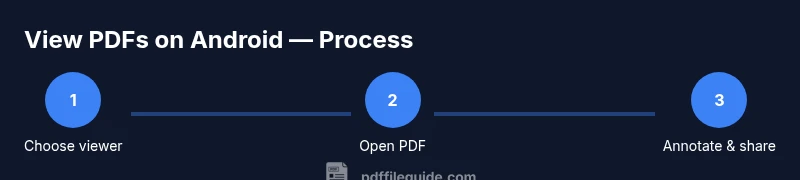
- 1
Identify viewing goal
Clarify whether you need offline viewing, annotation capabilities, or quick sharing. This helps you choose the best app and settings from the start.
Tip: Write down your primary tasks (read, annotate, share) before choosing a viewer. - 2
Find the PDF and locate a viewer
Open the file from your Downloads, Documents, or cloud storage. Launch the chosen PDF viewer and ensure it opens the document without error.
Tip: If the file won’t open, try another viewer to confirm file integrity. - 3
Open and adjust viewing
Use zoom, fit to width, and layout modes to maximize readability. Enable dark mode if available to reduce eye strain during long reads.
Tip: Test multiple zoom levels and font sizes on a challenging layout. - 4
Annotate or bookmark
If needed, add highlights, notes, or bookmarks. Check whether annotations are saved in the file or as a separate layer.
Tip: Keep annotations concise and organized by chapter or section. - 5
Share or export
Use the app’s share or export feature to send a copy or a link. Verify that the recipient can view the document with the original formatting.
Tip: Consider exporting as a flattened PDF for broad compatibility. - 6
Review app preferences
Set default viewer, cloud sync, and security options to create a consistent workflow across files and sessions.
Tip: Document your preferred settings for quick setup on new devices.
Questions & Answers
What is the best app to view PDFs on Android?
There isn’t a single best app; it depends on your needs. Use built‑in viewers for quick reads and third‑party apps for annotations, form filling, and offline access. Try a couple to see which offers the most reliable rendering and comfort for your documents.
There isn’t one best app; try built‑in viewers for quick reads and third‑party apps for annotation and forms to find what works best for you.
Can I view PDFs offline on Android?
Yes. After you download the PDF or sync it to your device, you can view it without an internet connection. Some apps also provide offline annotations and local storage options, which helps with fieldwork where connectivity is limited.
Yes, once downloaded, you can view PDFs offline and often annotate without needing internet access.
How do I annotate PDFs on Android?
Use a viewer that includes annotation tools such as highlights, notes, and stamps. Check whether annotations are saved within the file or as a separate layer, and organize them by page or section for easy review later.
Use annotation tools in the app to highlight, add notes, and save your marks for later review.
How can I improve accessibility when viewing PDFs on Android?
Choose apps with screen‑reader support and ensure the PDF itself is tagged properly. Use high‑contrast themes and adjustable text size to aid readability for users with visual impairments.
Pick apps with screen reader support and ensure PDFs are tagged; use high contrast and larger text for better readability.
Are there security concerns when viewing PDFs on Android?
Yes. Open PDFs from trusted sources, keep devices and apps updated, and review app permissions. If a file seems suspicious, avoid opening it and scan for malware with a security app.
Yes. Open only trusted PDFs, keep software updated, and check permissions to protect your device.
Watch Video
Key Takeaways
- Choose the right viewer for readability and fidelity.
- Use built‑in viewers for quick tasks; third‑party apps for advanced features.
- Optimize accessibility and sharing settings across devices.
- Keep apps updated and verify sources for security.