How to Make a PDF Free Online: A Practical Guide
Learn how to make pdf free online using trusted tools to create, convert, merge, and compress documents without software. Step-by-step guidance for safe results.


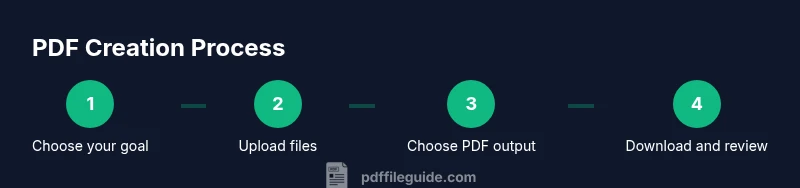
You can make pdf free online by using reputable web tools to create, convert, or merge documents without installing software. Start with a trusted online service, upload your source file or files, choose PDF as the output format, and download the result. This guide walks you through practical, safe steps to produce a high-quality PDF for free.
What 'Make PDF Free Online' Means
When people say make pdf free online, they usually mean using browser-based tools to transform existing files into PDFs or to build PDFs from scratch without installing software. The goal is quick, accessible results you can share immediately. According to PDF File Guide, the most reliable workflows rely on reputable services with transparent privacy policies and no heavy per-file fees. The process typically starts with a clear objective (convert, merge, or create) and ends with a downloadable PDF that preserves layout and readability. You can use a single tool or a combination of services to handle multiple formats—Word, Google Docs, images, or slides—into a single, well-structured document. This approach fits students, professionals, and teams who need fast, repeatable results. The keyword make pdf free online helps users locate the right tools quickly and aligns expectations for quality and privacy.
Safety and Privacy When Using Online Tools
Free online PDF services are convenient, but privacy matters. The PDF File Guide analysis shows that some sites retain uploaded data or use it to train services. Before uploading, read the provider’s privacy policy and data handling terms. Prefer services that offer clear deletion timelines, minimal data retention, and end-to-end encryption on transfers. If you must work with sensitive material, consider tools that explicitly state they do not store files or offer an option to work entirely in your browser with local processing. Always log out after use and avoid saving documents on shared devices. When in doubt, test with non-confidential content first to gauge how the service performs and how your files are treated.
Choosing the Right Free Online PDF Tool
Not all online tools are created equal. Look for a reputable provider with a straightforward privacy policy, clear terms of service, and transparent limits on file size or daily conversions. Check whether the tool supports your required tasks (convert, merge, compress, edit) and whether it can preserve fonts, images, and layout. Performance matters: faster conversions are preferable for frequent use. User reviews and independent analyses, such as those from PDF File Guide, can help you compare options. Security features like HTTPS, password protection, and restricted access controls are also important when handling confidential documents. Finally, consider whether you need a permanent account for easy access or a one-off conversion for a single task.
Create PDFs from Word, Google Docs, or Images
Creating a PDF from a source document is often the most common workflow for online users. To start, open your source file in Word, Google Docs, or an image viewer, and choose the online tool’s “Export to PDF” or “Save as PDF” option, if available. Alternatively, upload the file to the online service and select PDF as the output. For Google Docs, you can use the built-in export option; for Word, use Save as or Export to PDF. When starting from images, many tools allow you to upload multiple images and assemble them into a single PDF, preserving order and orientation. Pay attention to page size (A4 vs Letter) and image resolution to maintain readability. The PDF File Guide emphasizes testing the result on different devices to ensure consistent display.
Convert Other Formats to PDF
Beyond documents, you can convert slides, images, and spreadsheets to PDF online. Typical workflows include uploading a PPTX, XLSX, or image file, choosing PDF as the target, and initiating the conversion. For slides, ensure transitions and fonts are embedded to preserve appearance. For images, consider the preferred DPI (dots per inch) to balance clarity and file size. Some tools support batch conversion, which is helpful when you have many files. If you frequently convert, look for a service that remembers your preferred output settings. Remember to verify fonts and color accuracy after conversion, especially for presentations and marketing materials.
Merging and Splitting PDFs Online
Merging several PDFs into one file is a common need. Use an online tool that accepts multiple uploads, then arrange the order before merging. Conversely, splitting a large PDF into smaller segments can improve sharing and accessibility. Keep track of the resulting page counts and ensure that bookmarks or table of contents align with the new structure. If privacy is a concern, perform merges or splits only on trusted platforms and delete files promptly after download. When merging, check that headers, footers, and page numbers remain consistent across the combined document.
Compressing and Optimizing PDF Quality
Large PDFs can be cumbersome to share. Online compression tools reduce file size by adjusting image quality, font embedding, and optimization settings. Start with a balance between size and readability; overly aggressive compression can blur text and degrade results. It’s often best to test multiple compression levels to find the sweet spot for your audience and platform. If you need to retain high fidelity, choose a tool that offers a “high quality” option or archive-friendly compression. After compressing, re-check the document to ensure that no essential graphics or metadata were lost.
Editing and Annotating PDFs Online
Some free online services allow basic editing and annotation, such as adding text, highlighting, and drawing shapes. These features are handy for quick reviews, proofreading, or collaborative feedback. For more advanced edits (font changes, layout reflows, or form field edits), you may need a paid plan or offline software. Always save a copy before making edits, so you can revert if the result isn’t as expected. If you’re sharing a draft, use password protection or restricted access when supported by the tool.
Common Pitfalls and How to Avoid Them
Free online PDF tools can surprise you with limits on file size, daily conversions, or watermarks. Check the output size and confirm whether any watermark is added to the final document. Be wary of services that request excessive permissions or push you to install browser extensions. Some sites trap users with countdown timers or forced sign-ups; prefer transparent, refillable options. To avoid loss of data, always keep a local backup of originals and verify that the PDF opens correctly on multiple devices.
Security Tips: Passwords and Permissions
If you’re sharing sensitive information, use tools that offer password protection and permission controls. Create a strong, unique password for the PDF and disable printing or editing where possible. Remember that many free services may not store your PDFs indefinitely; understand the retention window and delete files promptly after download. When sharing links, use short-lived URLs or platform-specific sharing options with expiry dates to minimize exposure.
How to Verify Your Final PDF Is Ready
After downloading, review the PDF to confirm that text is selectable, fonts render correctly, and images maintain clarity. Check alignment, margins, and any embedded hyperlinks. Use a PDF viewer on desktop and mobile to ensure cross-device compatibility. If you see issues, re-export using adjusted settings or try a different online tool. This verification step helps prevent embarrassing mistakes in professional documents.
Next Steps and Alternatives If You Need More Features
If your needs go beyond free online options—such as advanced editing, form creation, or automation—consider desktop software, enterprise-grade cloud services, or open-source tools that offer offline processing. For many users, a hybrid approach works best: perform quick tasks online for speed, and reserve offline software for heavy editing or sensitive data. The PDF File Guide team recommends testing several workflows to identify which combination yields consistent results across devices and formats.
mainTopicQuery":"pdf creation"],
Tools & Materials
- Web browser(Latest version (Chrome/Edge/Firefox) installed.)
- Stable internet connection(Broadband recommended for larger files.)
- Source file(s) to convert/merge(DOCX, PPTX, JPG, PNG, etc.)
- Optional: PDF viewer(To review downloaded PDFs offline.)
- Privacy-friendly policy awareness(Prefer tools with clear data handling policies.)
Steps
Estimated time: Total time: 15-30 minutes
- 1
Choose your goal and tool
Decide whether you need to convert, merge, compress, or create a new PDF from scratch. Select a reputable online service that suits your task and your privacy comfort level. If you’re unsure, start with a simple conversion test.
Tip: Check the tool’s privacy policy before uploading any file. - 2
Gather and prepare source files
Collect all files you’ll need for the task (documents, images, slides). Keep the order in which you want them arranged for easy uploading. Rename files clearly to avoid confusion after conversion.
Tip: Consolidate into a single folder to minimize mistakes. - 3
Open the tool and upload your files
Navigate to the chosen online PDF tool and upload your files. If the service supports drag-and-drop, use it for speed. Ensure you’re on a secure connection (HTTPS).
Tip: Avoid uploading on public or shared computers. - 4
Set output preferences
Choose PDF as the output format. Adjust image quality, font embedding, and page size as needed. If you plan to share, choose higher quality with larger file size; for emailing, opt for smaller size.
Tip: For text-heavy documents, high readability matters more than image fidelity. - 5
Start the conversion or action
Click the convert, merge, or compress button to begin processing. Wait for the tool to finish, which may take a few seconds to a few minutes depending on file size.
Tip: If processing stalls, refresh or try a different tool. - 6
Download the finished PDF
Save the file to your device in a known directory. If offered, choose a descriptive filename that reflects the content and version.
Tip: Keep a backup of the original files before deleting them. - 7
Review the result
Open the PDF and verify text, images, and layout. Check hyperlinks, bookmarks, and any forms embedded in the file.
Tip: Test on both desktop and mobile viewers. - 8
Merge additional files (if needed)
If you need a single document from multiple sources, repeat the upload and merge steps before final download.
Tip: Ensure the page order is correct before finalizing. - 9
Compress for sharing
If the file is too large, apply a compression step. Balance size and quality to keep readability.
Tip: A small, readable file is often more effective for email and web sharing. - 10
Add security if required
If the tool supports it, add a password or restrict editing. Remember that security features vary by tool and may have trade-offs.
Tip: Use a strong, unique password and store it securely. - 11
Store and share
Upload to a cloud drive or share via a link with controlled access. Consider expiry dates for shared links.
Tip: Audit access periodically to protect sensitive documents. - 12
Clean up and reflect on needs
Delete any uploaded copies from the online tool if you’re finished. Reflect on whether you need an offline solution for ongoing work.
Tip: Document your preferred workflow for future use.
Questions & Answers
Can I make a PDF for free online without signing up?
Yes, many free online PDF tools let you perform basic tasks without creating an account. Some services may require signup for advanced features or to save work, but you can often complete simple conversions or merges without signing in.
Yes, you can usually do basic tasks without signing up; for advanced features you might create an account.
Are online PDF tools safe for sensitive documents?
Safety varies by provider. Look for clear data handling policies, HTTPS, and built-in deletion of your uploads. For highly sensitive materials, prefer offline software or tools with strict privacy guarantees.
It depends on the provider; choose services with strong privacy policies and secure connections, or use offline software for highly sensitive files.
Can I create fillable PDFs online for free?
Some tools offer free capabilities for adding simple form fields. If you need complex forms or data collection features, you may need a paid plan or desktop software.
Some free tools let you add basic form fields; for complex forms, consider paid options or offline solutions.
Will free online tools add watermarks to my PDFs?
Many free tools add watermarks on outputs. Look for watermark-free options or test multiple tools to find one that preserves your document’s appearance.
Yes, watermarks are common in free versions; you may need to choose tools that offer watermark-free outputs.
What formats can be converted to PDF online for free?
Common formats include Word, Google Docs, PowerPoint, Excel, and image files like JPG/PNG. Check each tool’s supported formats before starting.
Typically, Word, Docs, slides, spreadsheets, and common image formats can be converted to PDF online.
Watch Video
Key Takeaways
- You can create PDFs without installing software.
- Choose reputable tools and review privacy policies.
- Convert from Word, Docs, or images to PDF easily.
- Merge, compress, and secure PDFs online as needed.
- Always verify the final PDF before sharing.