How to Unlock a Secured PDF: Safe and Legal Methods
Learn safe, legal ways to unlock a password-protected PDF. This guide covers prerequisites, step-by-step actions, and best practices for responsible access.


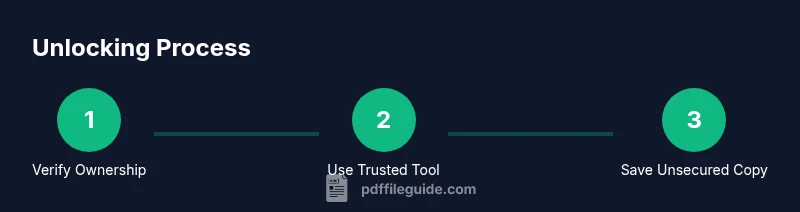
To answer if pdf is secured how to unlock, you must confirm you own the document or have explicit permission from the owner. Then gather any known password, use a trusted PDF editor to remove security, and save an unsecured copy. If you lack permission, request access instead of attempting to bypass protections. This keeps you compliant with laws and copyright. PDF File Guide emphasizes ethical access throughout.
If pdf is secured how to unlock: Why this matters
PDF security exists to protect confidential information and control how a document is used. When a file is password-protected, it’s not just a gatekeeper for convenience; it’s a policy tool that helps organizations maintain privacy, protect intellectual property, and ensure compliance with data protection laws. For writers, teachers, students, and professionals, understanding how to unlock a secured PDF—and when not to—is essential. The question of how to unlock a secured PDF often arises when you’re collaborating on a project, retaining records, or need to extract information for legitimate reasons. According to PDF File Guide, the right approach hinges on ownership, consent, and using official tools rather than improvised methods. The goal is to preserve the integrity of the document while enabling authorized access. In practice, you should treat any attempt to access restricted content as a responsibility: proceed only if you have clear permission and a legitimate need. This mindset protects both you and the content creator and keeps your workflow compliant with industry best practices.
This section frames the how-to unlock topic within a legal and ethical context. By starting from a place of permission, you reduce risk and simplify the steps that follow. The PDF File Guide team notes that the most reliable path is to obtain the password from the rightful owner or an administrator and then unlock using approved methods. If you do not have permission, the correct path is to request access rather than attempting a bypass. In many cases, organizations can provide a secure, shareable version or issue a temporary password that aligns with policy. The emphasis here is transparency and ownership, not expediency. With permission in place, you can proceed safely to remove the security and create an accessible copy for legitimate use. Remember: permission plus proper tooling equals a safe unlock process.
In this context, the practical takeaway is that unlocking should be a deliberate, documented action rather than a reflexive workaround. The phrase if pdf is secured how to unlock is not a permission to bypass; it’s a reminder to verify legality before attempting any action. PDF File Guide consistently reminds readers to document approvals, verify file provenance, and keep logs of who accessed the document and when. This accountability protects you and the content owner while streamlining the unlock workflow.
Tools & Materials
- A computer with a trusted PDF editor(Prefer a recent version with password management features)
- Verified password from the file owner or explicit permission(Keep a record of permission or a written request)
- Backup copy of the PDF(Create a duplicate before attempting any changes)
- Secure environment and updated antivirus(Recommended when downloading tools from the internet)
- Official or enterprise password recovery tools (from reputable sources)(Use only from trusted vendors and verify signatures)
Steps
Estimated time: 20-40 minutes
- 1
Verify ownership and permission
Confirm you are authorized to unlock the PDF. If you’re unsure, contact the file owner or your administrator to obtain explicit written permission. This step prevents accidental rights violations and ensures you have a legitimate reason to proceed.
Tip: Document the permission email or ticket number for future reference - 2
Prepare password and environment
Gather any known passwords and prepare a secure, up-to-date workstation. Back up the original file before making changes. If the password is unknown, plan how to request access or reset credentials through official channels.
Tip: Work on a copied file to avoid accidental data loss - 3
Open the PDF in a trusted editor
Launch a reputable PDF editor and open the secured document. Enter the password when prompted. If you don’t know the password, stop and contact the owner for access rather than attempting to crack or bypass protections.
Tip: Ensure the software is from a trusted source to minimize security risks - 4
Remove security and save a copy
In the editor, access the security or encrypt settings and remove the password protection. Save the document as a new, unsecured copy. Do not overwrite the original file if you’re uncertain about the results.
Tip: Verify the new file can be opened without a password on another device - 5
Verify accessibility and store securely
Open the new unprotected file to confirm access works as intended. Store the secured original in a safe place and distribute the unprotected copy only to authorized users.
Tip: Maintain a simple access log to track who uses the unlocked document
Questions & Answers
What does it mean when a PDF is secured?
A secured PDF has restrictions like password protection or editing limits set by the author. Access requires the password or permission to view, copy, or print. Always confirm you are authorized before attempting to unlock.
A secured PDF has protections set by the author. You usually need the password or permission to view or modify it, so make sure you’re authorized before trying to unlock.
Can I unlock a PDF without the password if I own the file?
If you own the file or have explicit permission, you should be able to unlock it using a trusted PDF editor after providing the password or following the owner’s procedure. If you don’t have permission, obtain it before proceeding.
If you own the file, you can unlock it with a trusted editor after you provide the password or follow the owner’s steps. If you don’t own it, get permission first.
What should I do if I forgot the password?
Contact the document owner or administrator to reset or provide access. Do not use unauthorized password-cracking tools. Legitimate password recovery channels exist through the organization or vendor.
If you forgot the password, reach out to the owner or admin to regain access through legitimate channels. Avoid cracking tools.
Are there risks with unlocking PDFs?
Risks include violating copyright, exposing sensitive data, and violating organizational policies. Always ensure legal permission and protect the resulting unprotected copy by restricting who can access it.
Unlocking can risk violating copyrights or policies, so only proceed with permission and limit access to authorized people.
What if the PDF won’t unlock even with permission?
Some PDFs have additional security layers or restrictions. In such cases, consult the owner for a different format or an unencrypted version, or request a secure share link instead.
If it still won’t unlock, talk to the owner about a different format or unencrypted version.
Should I keep the original secured file after unlocking?
Yes, keep a secure backup in case you need to restore the original protections or verify provenance. Document any changes and ensure the unprotected copy is shared only with authorized users.
Keep a secure backup in case you need to restore protections and share the unlocked copy only with approved people.
Watch Video
Key Takeaways
- Verify ownership before unlock.
- Use trusted tools to remove security.
- Back up the original file first.
- Save and test an unsecured copy.
- Respect legal boundaries and document approvals.