Traslate PDF: Step-by-Step Guide to Translating PDFs
Learn how to traslate pdf effectively using OCR, translation tools, and PDF editors. This step-by-step guide covers methods, quality checks, and best practices for accurate multilingual PDFs.


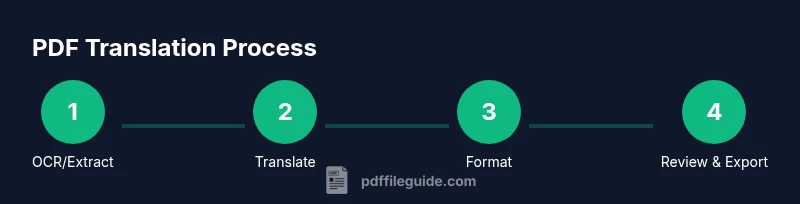
To traslate pdf, extract the text (OCR if needed), translate with a machine or human service, then rebuild a new PDF from the translated text. According to PDF File Guide, you’ll need the original PDF, an OCR/text-extraction tool, a translation method, and a PDF editor to reassemble. Expect formatting tweaks after translation.
Traslate PDF: Why It Matters
Traslate PDF is more than swapping words between languages. It requires preserving the original document’s structure, typography, and accessibility features while delivering accurate meaning in the target language. According to PDF File Guide, traslate pdf is a critical capability for global teams, marketing collateral, legal disclosures, and technical manuals. A quality translation maintains section headings, tables, captions, and bullet lists so readers can follow the content without confusion. Localization isn’t just about language; it’s about making content usable for diverse audiences. When done well, translated PDFs reduce confusion, improve trust, and expand market reach. The process benefits translators, editors, and end users who rely on precise terminology. Establishing a clear workflow and choosing the right tools are essential first steps in achieving reliable, publish-ready multilingual PDFs.
traslate pdf is more than swapping words between languages. It requires preserving the original document’s structure, typography, and accessibility features while delivering accurate meaning in the target language. According to PDF File Guide, traslate pdf is a critical capability for global teams, marketing collateral, legal disclosures, and technical manuals. A quality translation maintains section headings, tables, captions, and bullet lists so readers can follow the content without confusion. Localization isn’t just about language; it’s about making content usable for diverse audiences. When done well, translated PDFs reduce confusion, improve trust, and expand market reach. The process benefits translators, editors, and end users who rely on precise terminology. Establishing a clear workflow and choosing the right tools are essential first steps in achieving reliable, publish-ready multilingual PDFs.
Tools & Materials
- Original PDF file(Source document you want translated; keep a backup copy.)
- OCR/text-extraction tool(Use high-accuracy OCR for scanned PDFs; ensure language packs installed.)
- Machine translation service or translator(Choose a service with domain-appropriate terminology or a bilingual human editor.)
- PDF editor or layout tool(Needed to reinsert translated text and adjust formatting.)
- Glossary or bilingual terminology list(Keeps terminology consistent across sections.)
- Proofreading tools or human proofreader(Critical for accuracy, consistency, and typography checks.)
Steps
Estimated time: Total time: 60-120 minutes
- 1
Prepare the source PDF
Open the file and classify content: identify searchable text versus images. Note language, fonts, and any embedded forms. This assessment determines whether OCR is required and how you will approach translation.
Tip: Tag sections or headings to keep track of translated segments. - 2
Extract text with OCR or text layer
If text is not selectable, run OCR at high accuracy to produce editable text. If text is already selectable, skip OCR and copy text directly. Review extracted text for obvious errors before translating.
Tip: Choose language packs carefully; incorrect language settings reduce accuracy. - 3
Translate the content
Provide the extracted text to a translation tool or a bilingual editor. Prioritize domain-specific terminology, and keep formatting cues intact (bold, headings, bullets) where possible.
Tip: Maintain a translation memory or glossary to ensure consistency. - 4
Rebuild the PDF with translated text
Use a PDF editor to replace the original text with translated text. Preserve layout, fonts, and image captions. Consider side-by-side or extended notes for language variants where appropriate.
Tip: Check that line breaks and hyphenation align with the target language. - 5
Proofread and adjust formatting
Review typography, spacing, and alignment across pages. Verify that headings, tables, and captions look correct after translation. Correct any mis-placed images or float elements.
Tip: Run automated checks for broken links or missing fonts. - 6
Export and deliver the final PDF
Export to a stable PDF/A or PDF/X format if required by your audience. Save a bilingual version if useful for reviewers, and store metadata that reflects the translated language.
Tip: Test the final file on multiple devices and PDF readers.
Questions & Answers
What is the最 reliable method to traslate pdf?
A mixed approach—extract text, translate with human review, and reassemble—gives reliable results while preserving layout and terminology.
Use a mixed approach: extract, translate with review, then rebuild the PDF.
Is automated translation accurate for complex formatting?
Automated translation provides a draft. Complex layouts and technical terms require human editing to ensure precision.
Automation gives a draft; human editors verify accuracy.
How can I preserve layout after translation?
Translate text within a layout-aware editor, keep font choices, and adjust line breaks to fit the target language while maintaining captions and tables.
Keep the layout by editing in a layout-aware tool and verify captions.
Which tools are best for traslate pdf?
A combination of OCR software, a translation service or editor, and a PDF editor yields good results; choose tools with strong language support and reliable export options.
Choose strong OCR, translation, and PDF editing tools with good export options.
What are common pitfalls to avoid?
Fonts, encoding, and image-based text can break translation flows. Always test fonts and ensure text reflows correctly after translation.
Watch out for font and encoding issues; test reflow after translation.
Watch Video
Key Takeaways
- Start with OCR for scans to access editable text.
- Use a glossary to maintain terminology across sections.
- Proofread the translated text to fix syntax and typography.
- Preserve layout and accessibility features during rebuild.
- Validate the final PDF on multiple devices before delivery.